Improving grocery management and recipe finding to reduce stress in meal activities for college and university students.
Overview
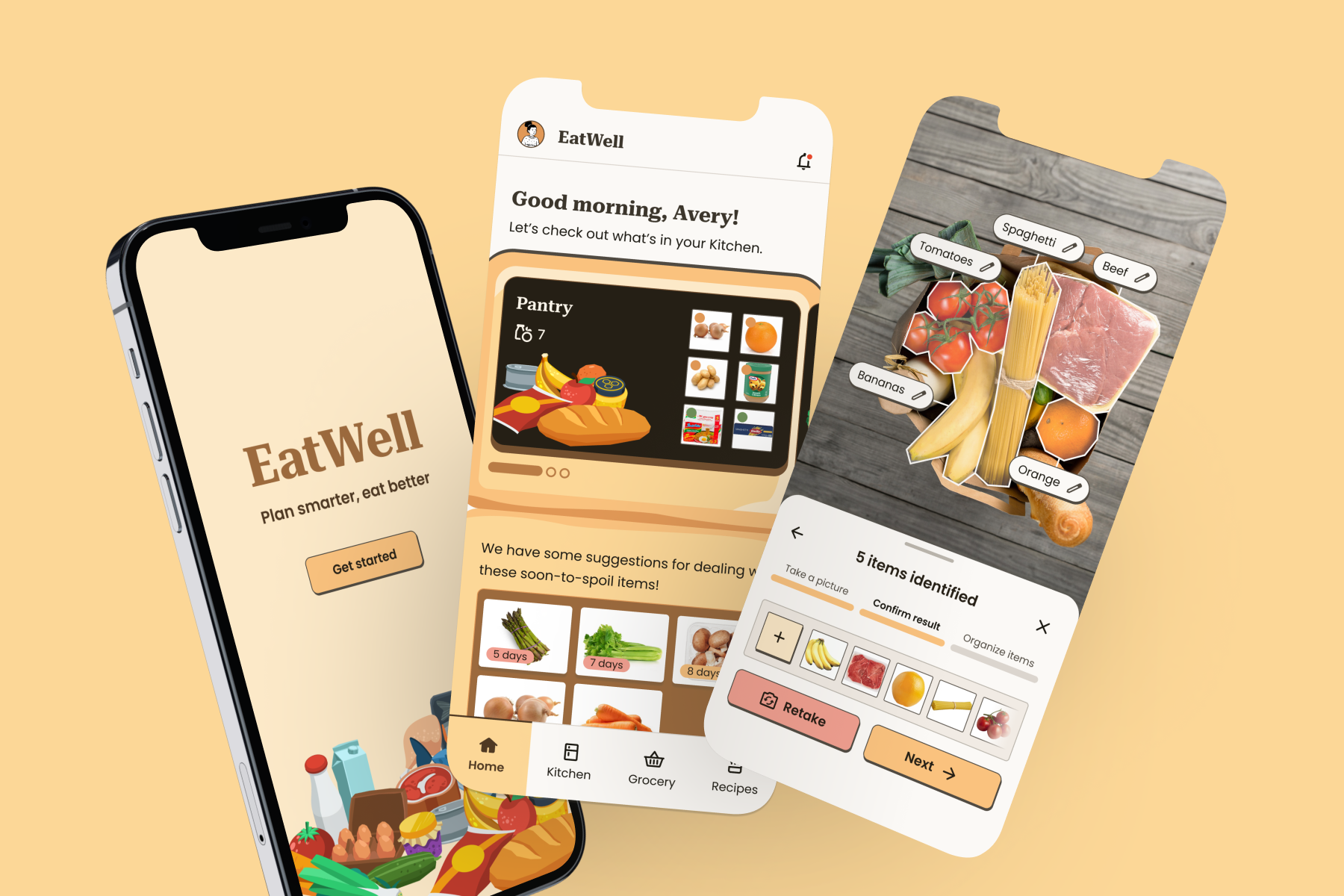
It can be difficult for young adult postsecondary students to monitor their groceries and make enjoyable meals consistently amidst busy schedules. From research to design and testing, I explored students' experience around meals and developed EatWell, a digital tool to help them manage their groceries and find suitable recipes.
Role
Product Designer, independent project
Tools
Figma, Sketchbook, Google Forms
Timeline
Research & Ideation: Sep – Dec 2024
Design & Testing: Jan – Apr 2025
Quick navigation
The challenge
Grocery shopping and cooking regularly take up too much mental load for young adult postsecondary students.
The solution
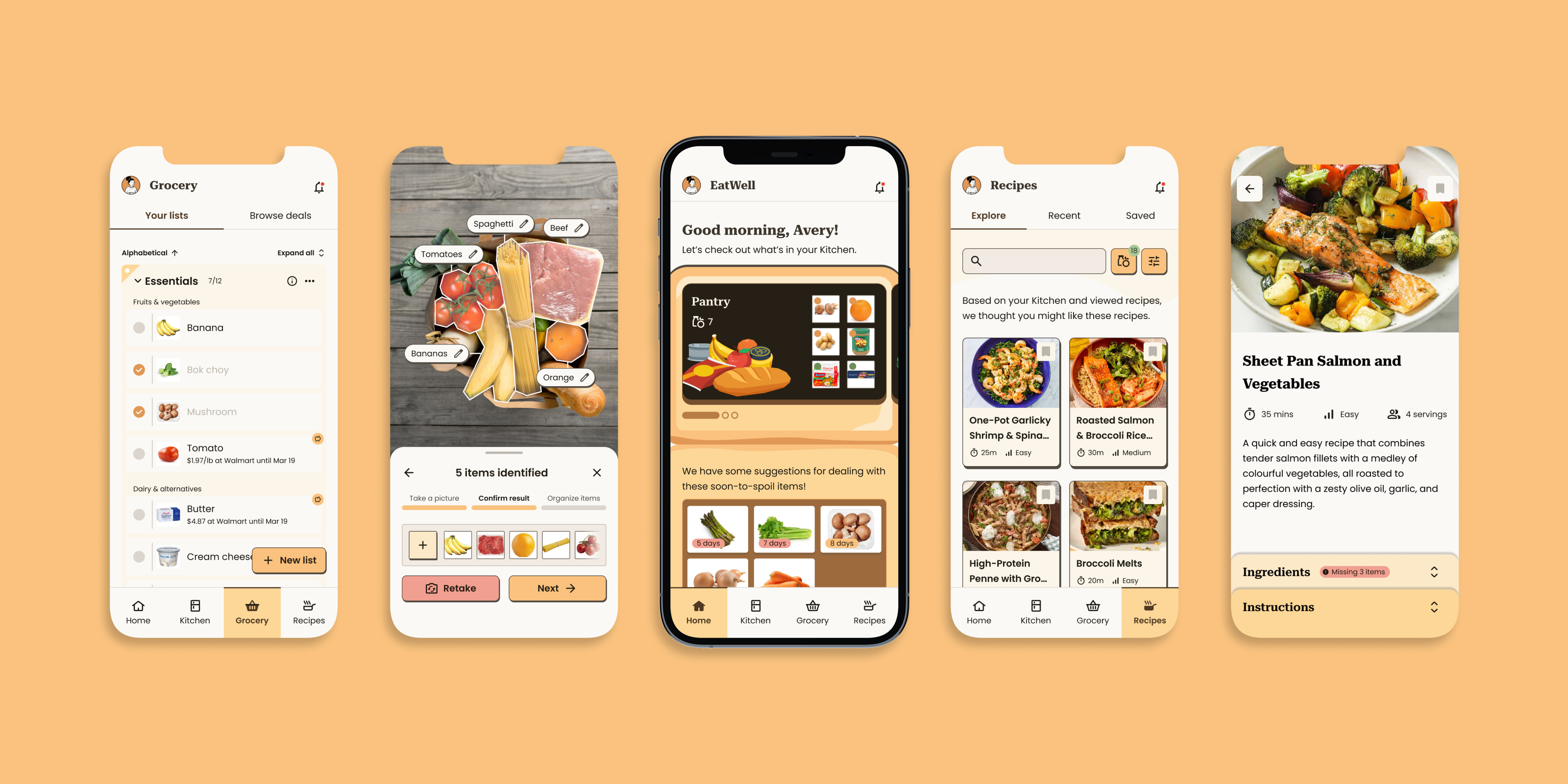
A mobile tool helping students keep track of groceries and find varied recipes that suit their circumstances.
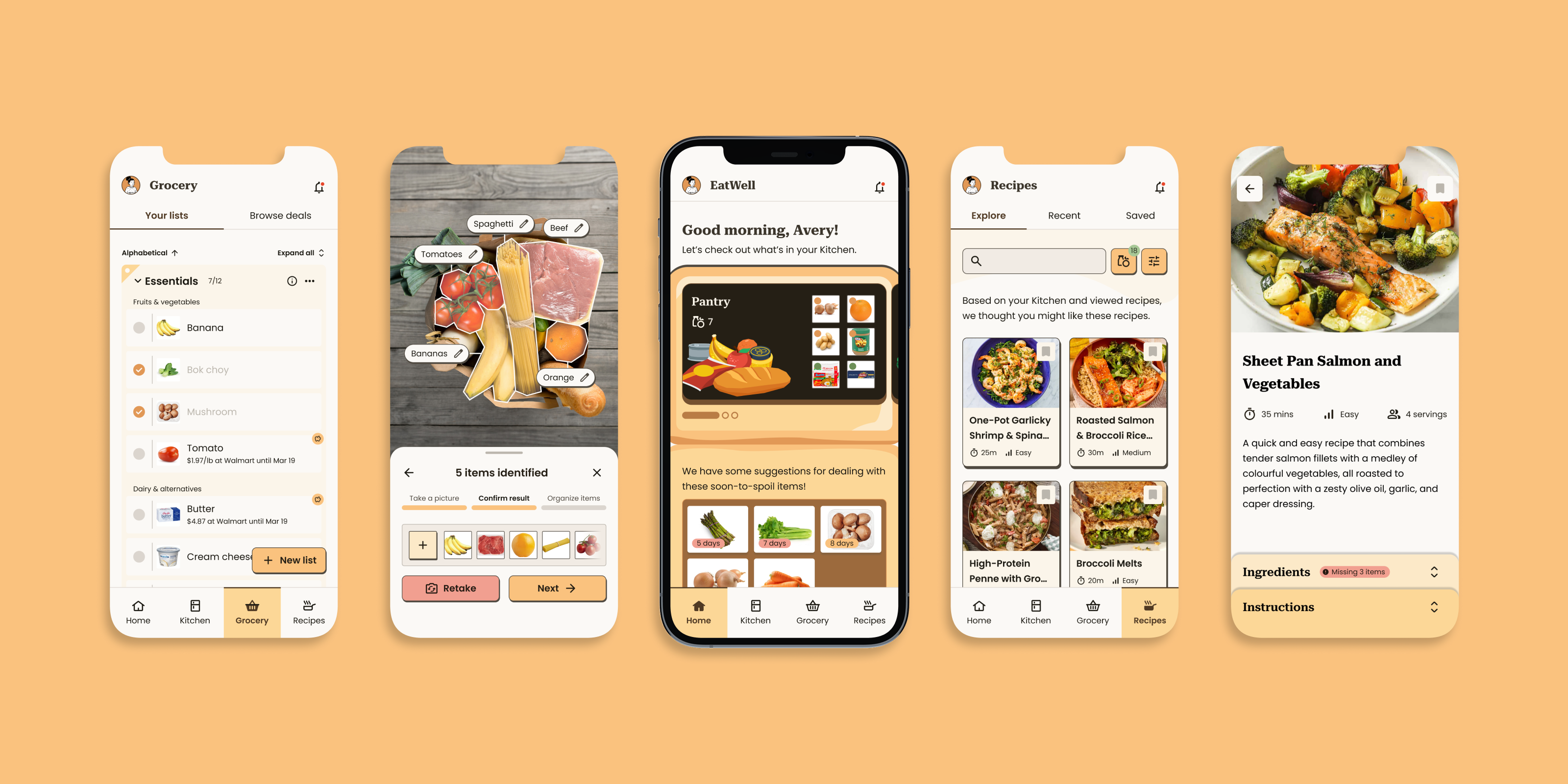
Reduce mental load: Students keep track of expiry dates and estimated spoilage, and when their groceries are running low.
Provide flexibility: Students easily find recipes that fit their busy schedules, tight budgets, limited facilities, and dietary preferences.
Build confidence: Students who live on their own for the first time familiarize themselves with grocery shopping and cooking independently.
Research
Online survey revealed that the lack of time and high stress levels are common reasons behind students' irregular and unhealthy diets.
Because they're handling new environments, dynamics, and tasks, young adults have higher rates of irregularity in their routines. Coupled with the increasing workload, this leads to delayed and shorter sleep and irregular meals. Under the stress of time and busy schedules, many students tend to skip meals or eat unhealthily to make time.
84%
frequently consider the cost when buying food, drinks, and groceries.
56%
often factor in the time available, while the remaining occasionally consider it.
68%
often go for the convenient option.
Making healthy and enjoyable meals requires time that many students don't have and efforts they're not motivated to make.
Conversations with college students confirmed that they generally know how to eat healthily but struggle to do it consistently with limited time, skills, and budgets. The majority are too busy to pay close attention to what they're eating, while the few who actively monitor their diets are either working out or navigating serious health issues.

Time and budget are big obstacles, isn't motivated to put in effort when busy.
"When I don't have time, I just want to survive."

Lacks time and skills to cook properly, relies on fast food and frozen homemade meals.
“Time and motivation are very big challenges, also stress.”

Struggles to use up fresh groceries on their own, skips meals when pressed for time.
"I just have to let go of the excuses and actually start eating healthy."
Time and budget are big obstacles, doesn't want to put in effort when busy.
"When I don't have time, I just want to survive."
Lacks time and skills to cook well, relies on fast food and frozen homemade meals.
“Time and motivation are very big challenges, also stress.”
Struggles to use up fresh groceries on their own, skips meals when pressed for time.
"I just have to let go of the excuses and actually start eating healthy."
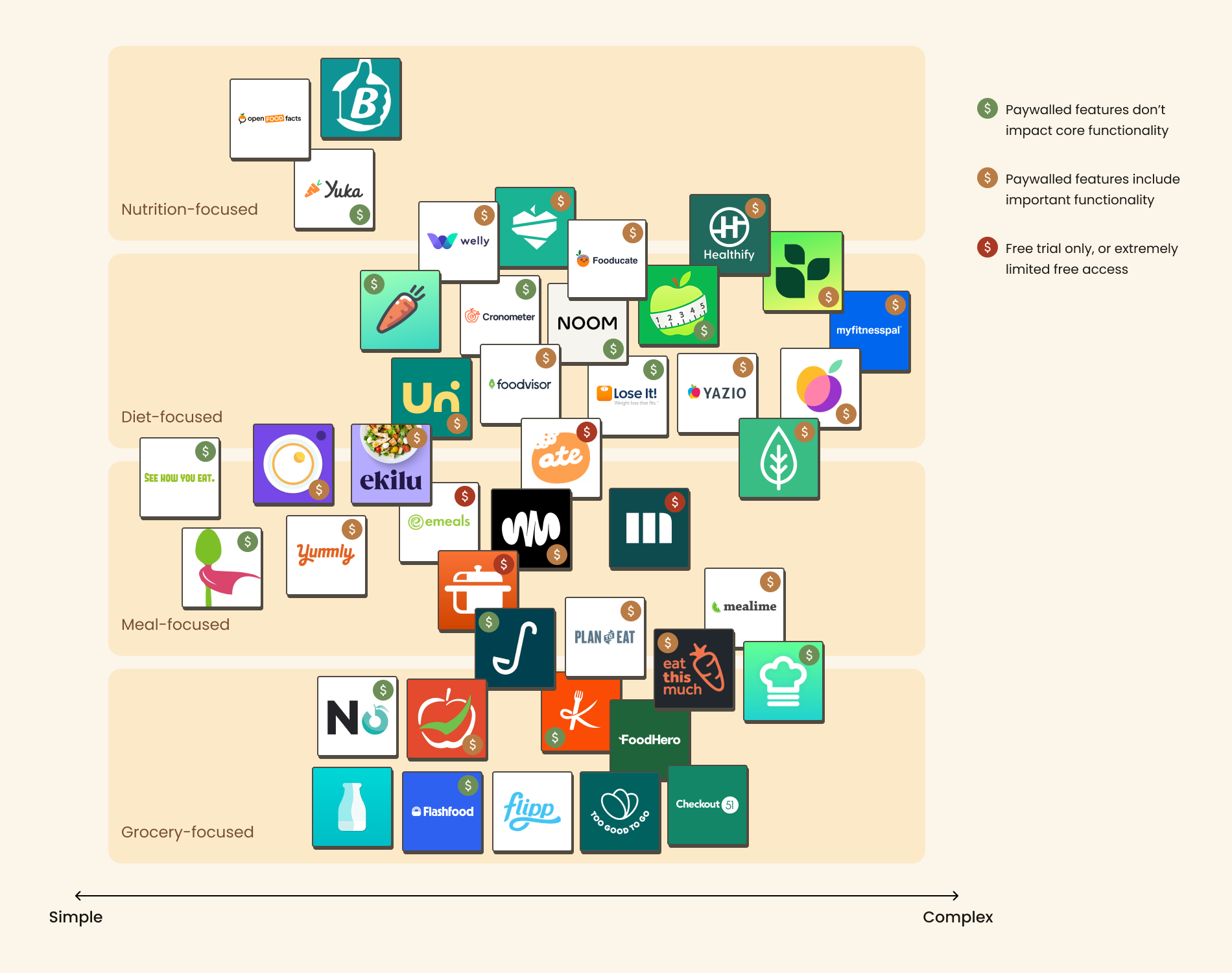
The cost, complexity, and lack of visibility of existing apps prevent students from finding ones that benefit them long-term.
Simple apps like Out of Milk are more economical and less mentally taxing, but lesser known. Complex apps like MyFitnessPal or Healthify, while well-known, often paywall useful features and revolve around calorie trackers and streak systems that don't fit into students' busy lifestyles and stressful schedules.
Ideation
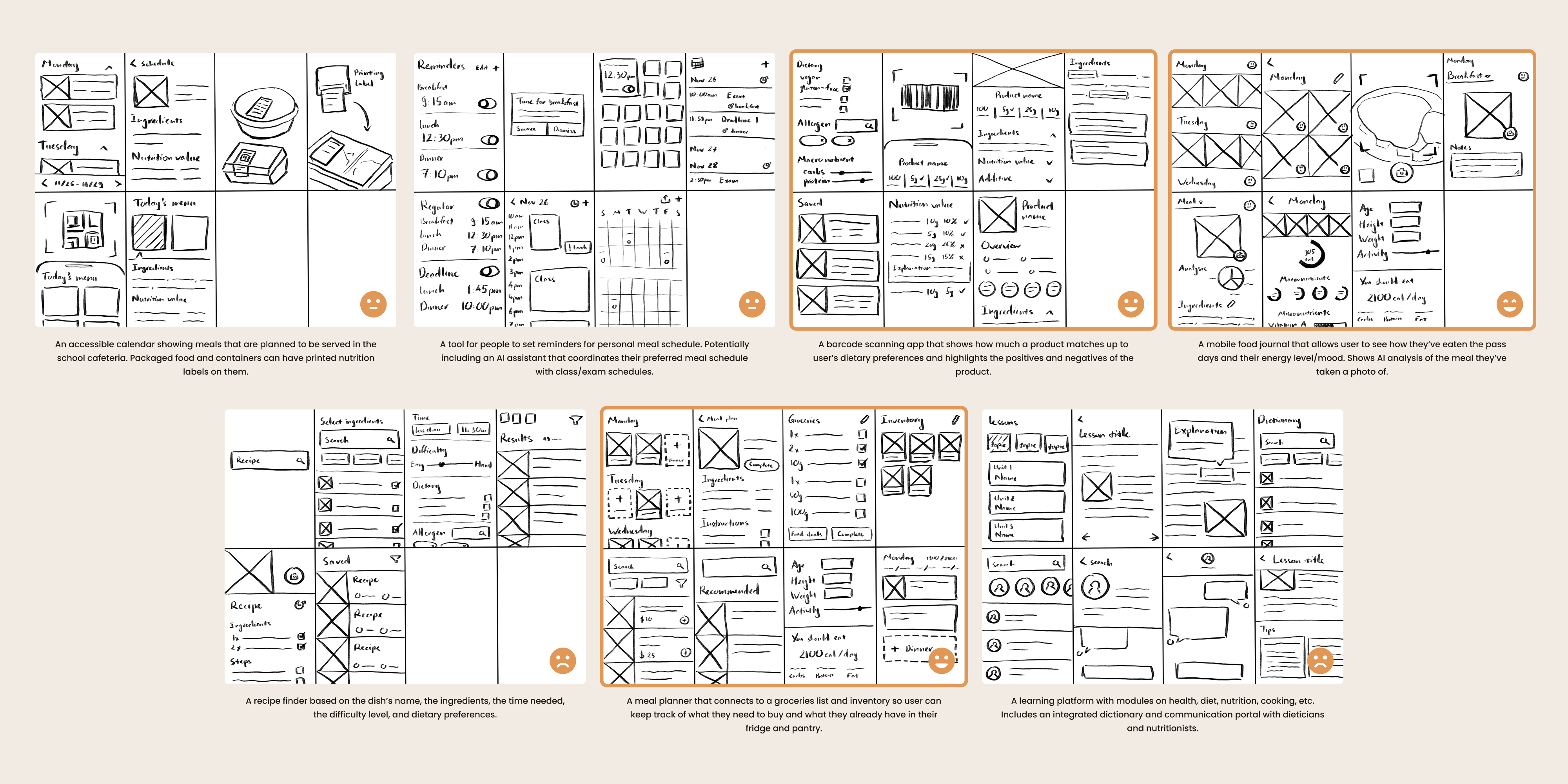
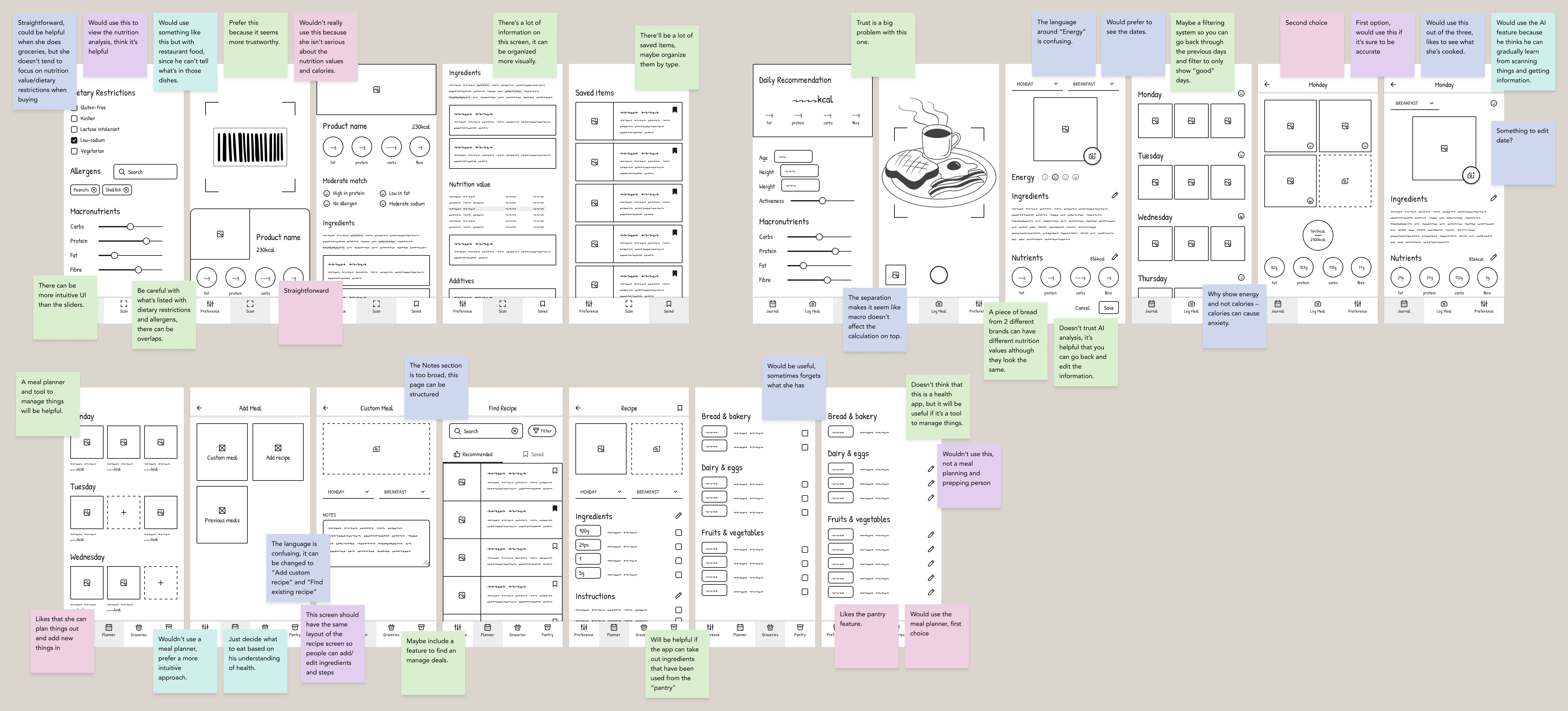
I brainstormed potential solutions based on factors that affect students' diets, then conducted different rounds of concept testing.
Test participants were more enthusiastic toward practical tools that they hadn't encountered and generally valued convenience and affordability. Notably, they would use the AI image analysis if the information is accurate and they can trust it. No concept was especially more impactful or favourable by the final round of testing.

Going back to the research findings, I pinned down the common themes that can be solved...
Unable to cook before ingredients spoil
Students tend to grocery shop for one, and buying enough ingredients for different meals often means leftover ingredients aren't used up in time.
Not being able to switch up meals
With busy schedules, it can be difficult to think of new dishes to make or get the energy to make more complex ones.
...and narrowed down the desired features that are relevant.
- 1. Keeping track of groceries
- 2. Finding recipes by ingredients
- 3. Filtering results based on preferences

Design
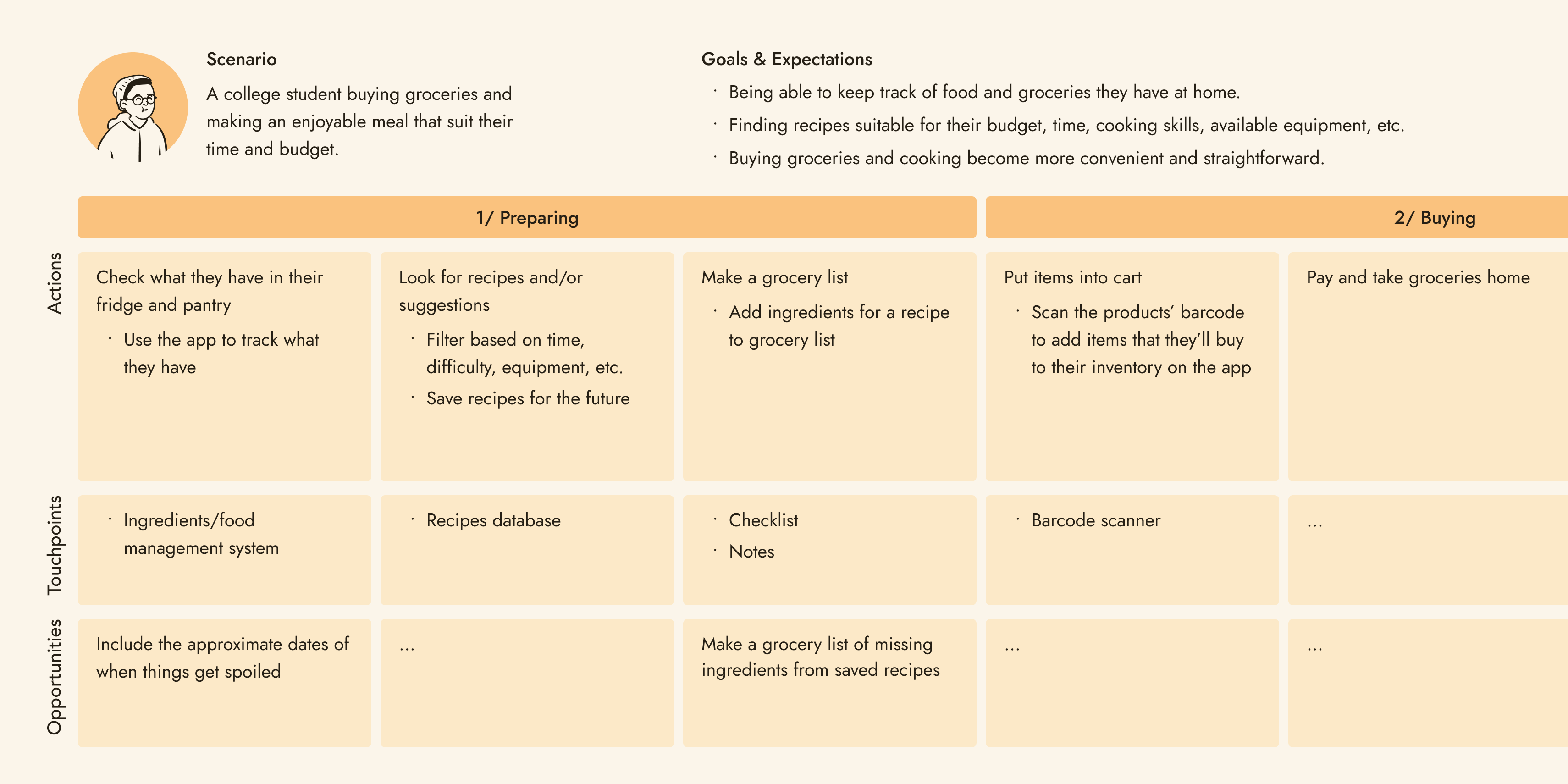
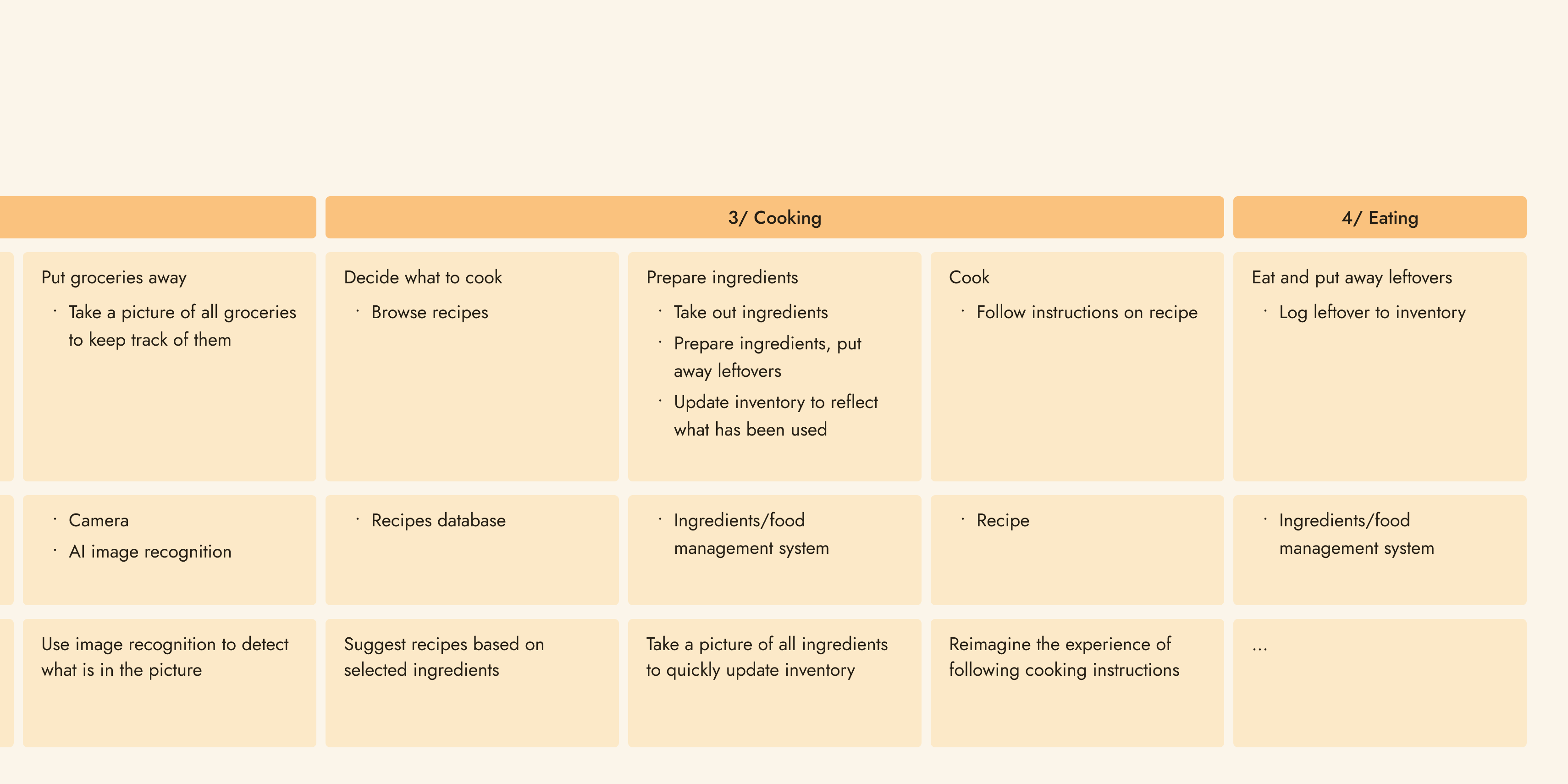
Using findings from primary research, I mapped out how this concept would come into the user journey...
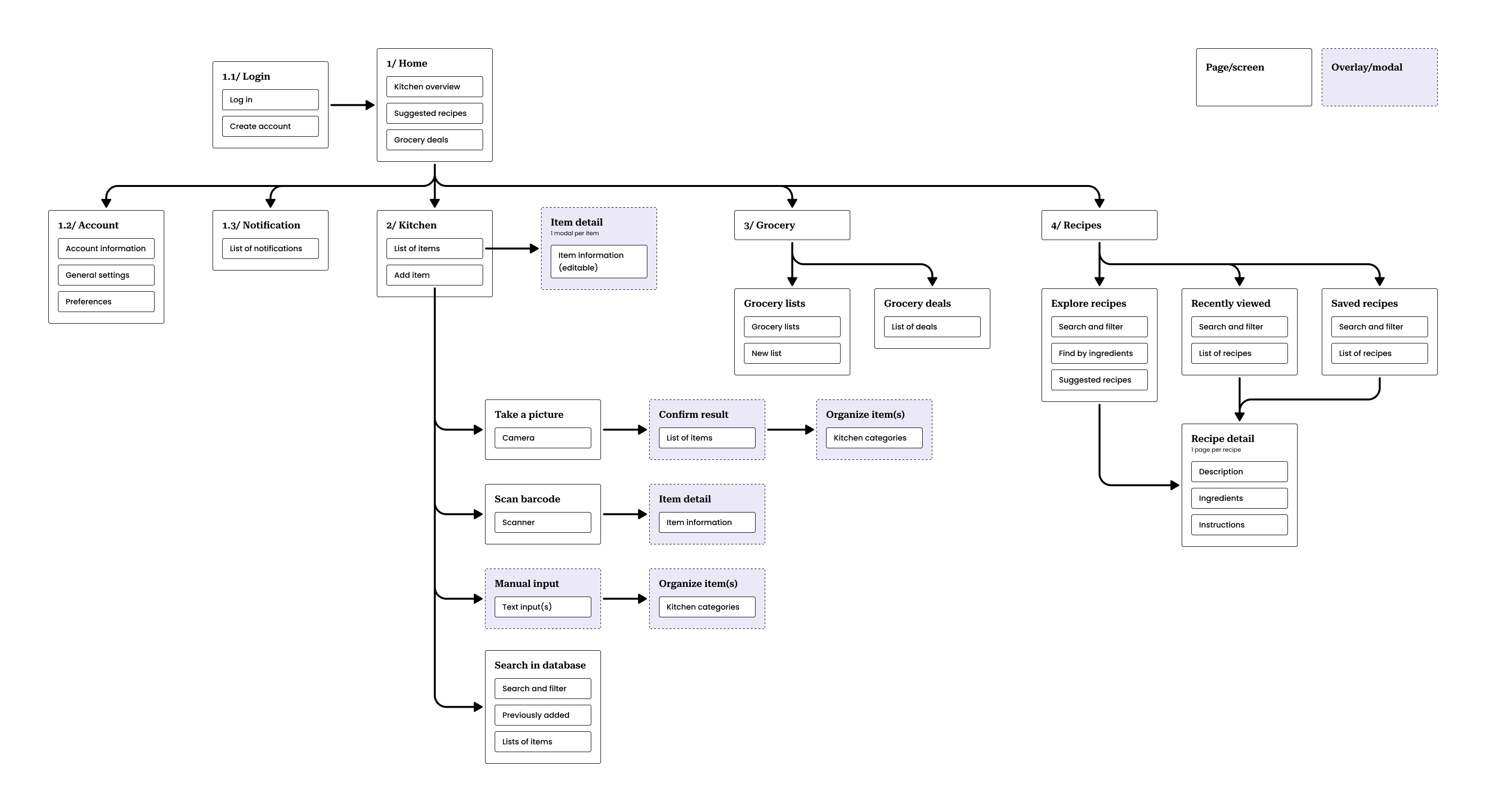
...then mapped out the screens for an MVP.
The design and testing process focused on 3 use cases to cover the journey from buying groceries to cooking.
If you're interested in a specific use case, click on the picture to jump ahead.
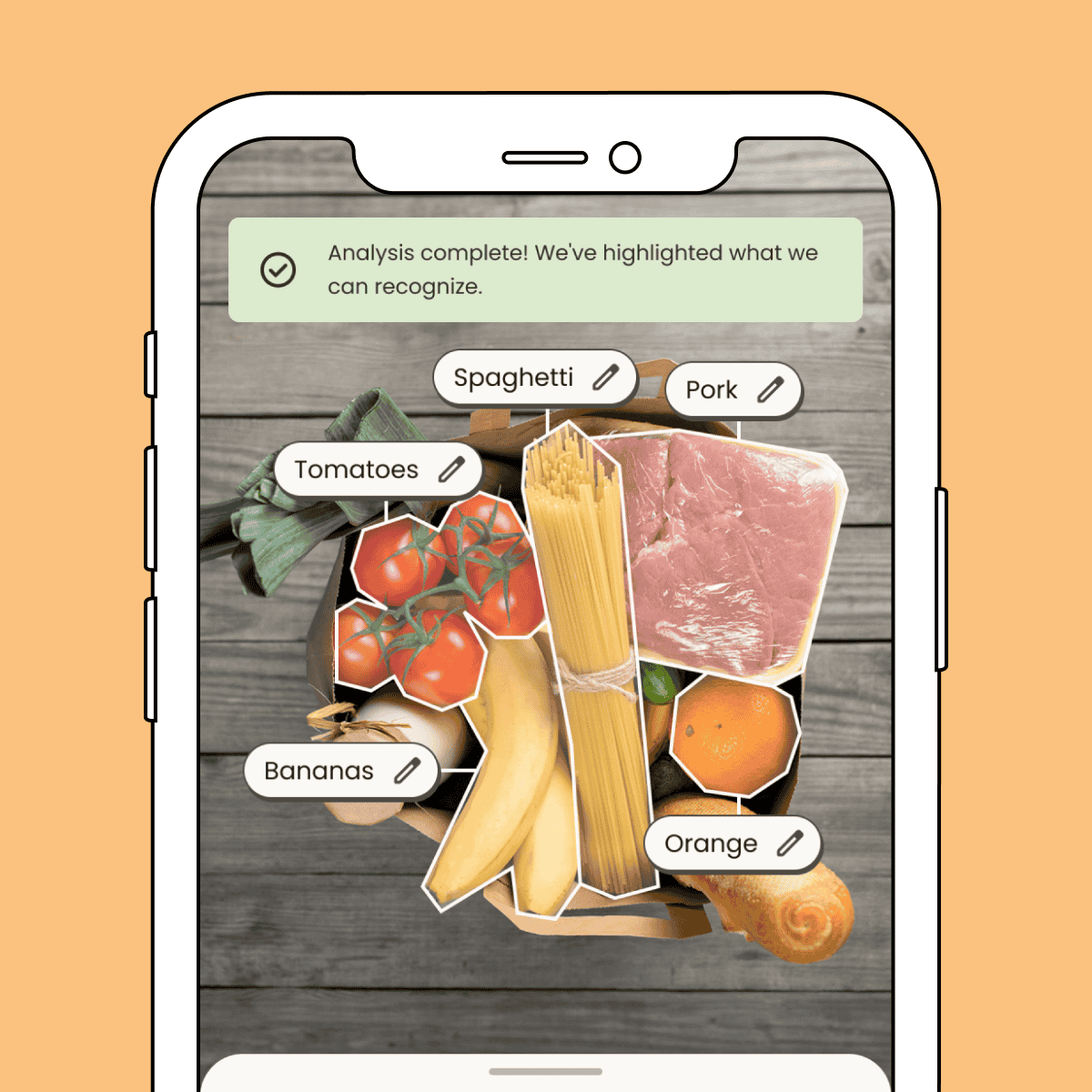
Use case 1
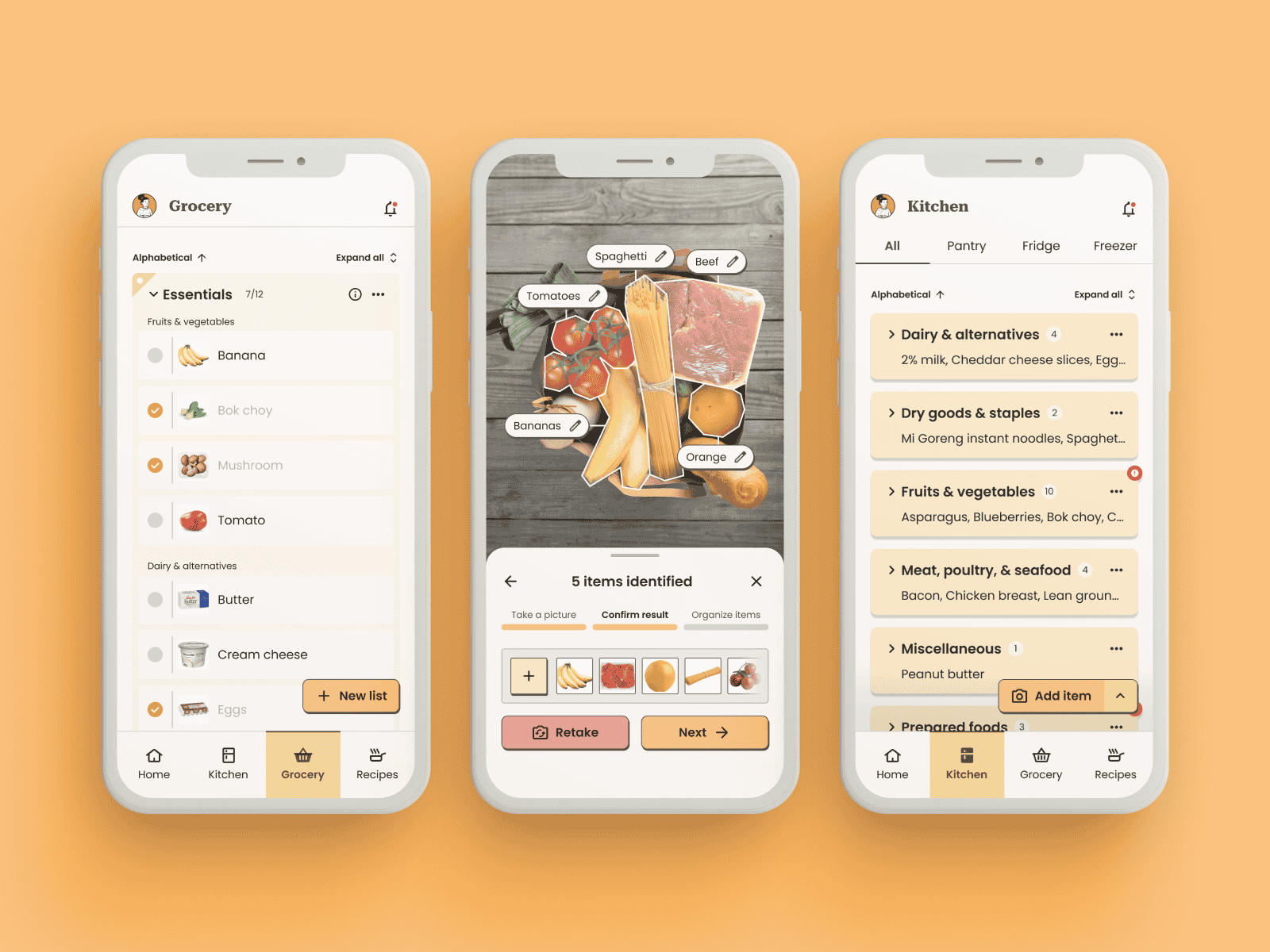
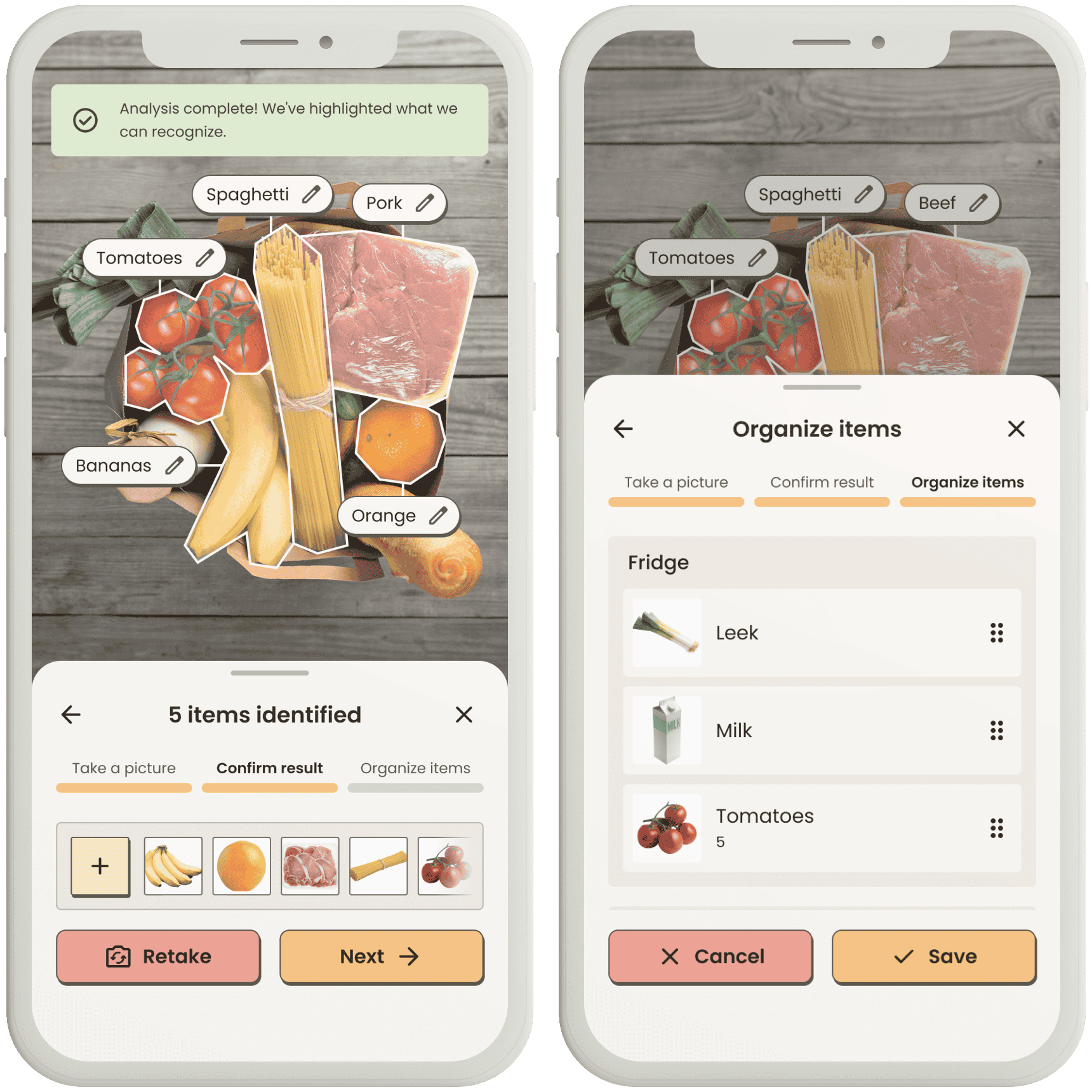
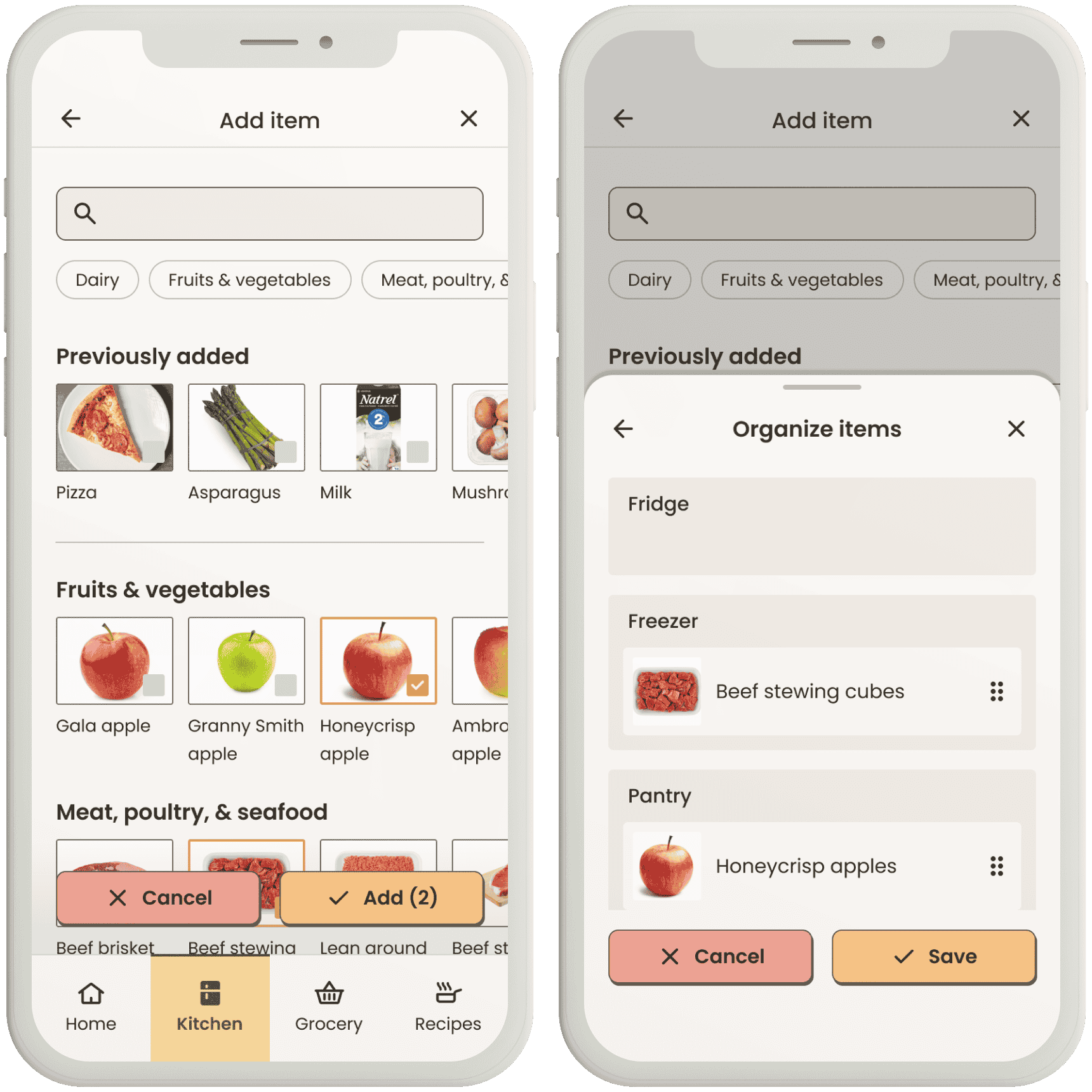
Using a picture to add groceries to a digital management system
User story
As a student, I want to quickly add the groceries I've bought to a digital management system so I can keep track of what food I have at home.
Preconditions
The user has installed the app on their phone and can access the camera.
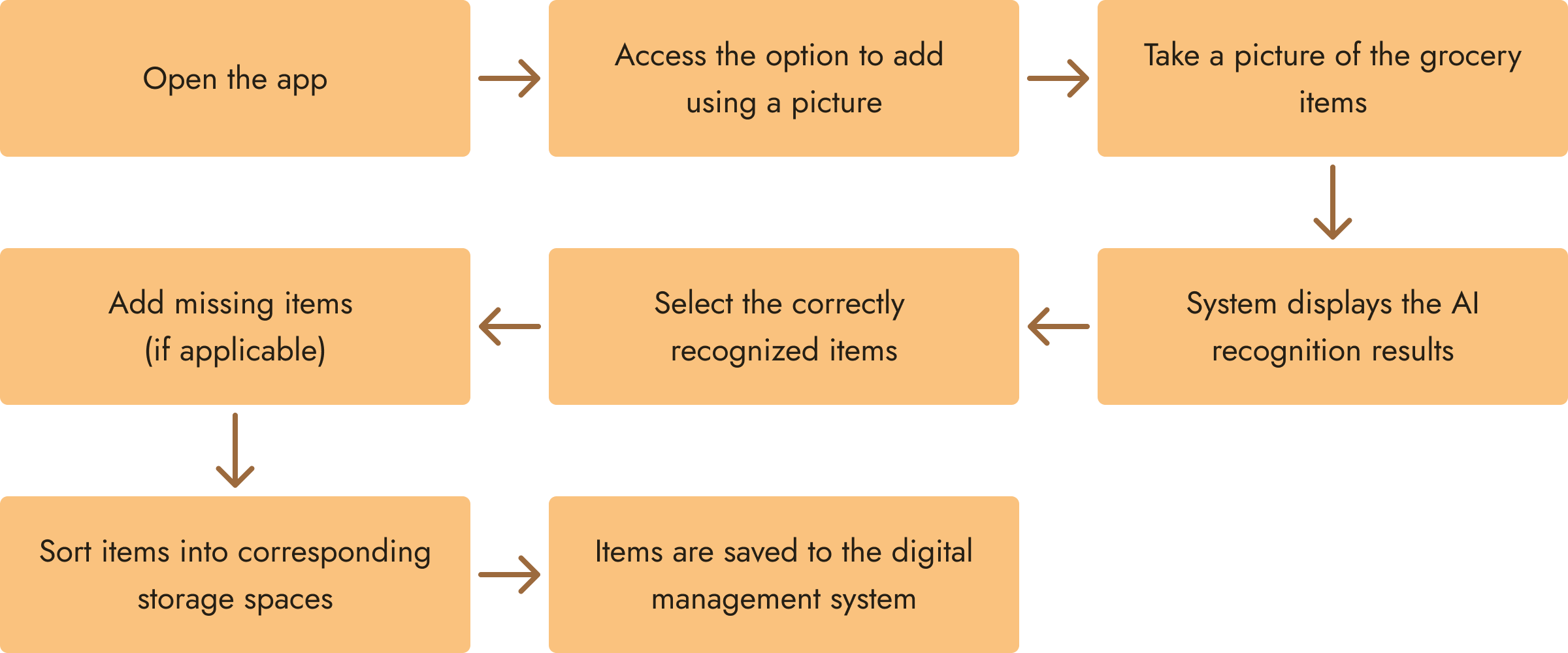
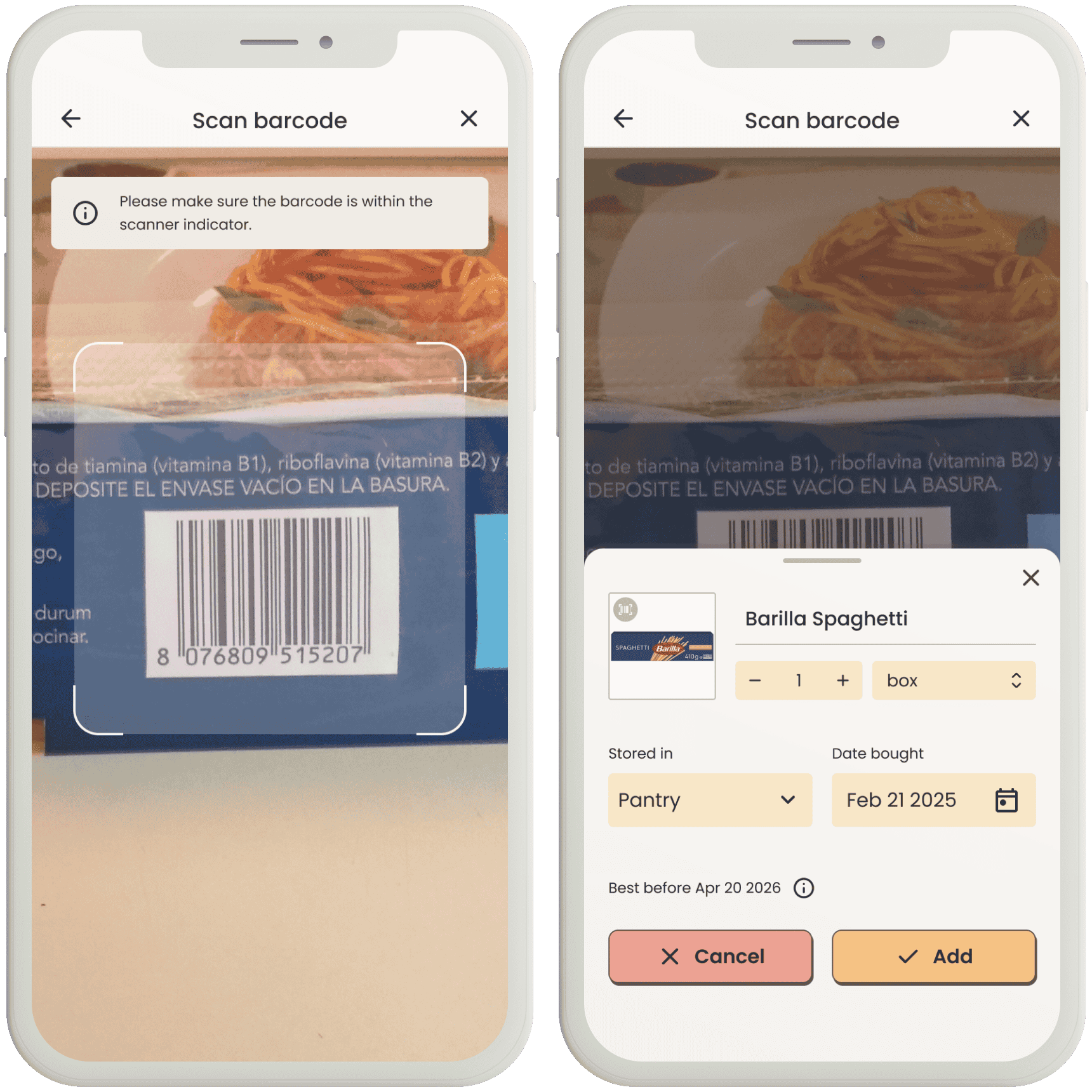
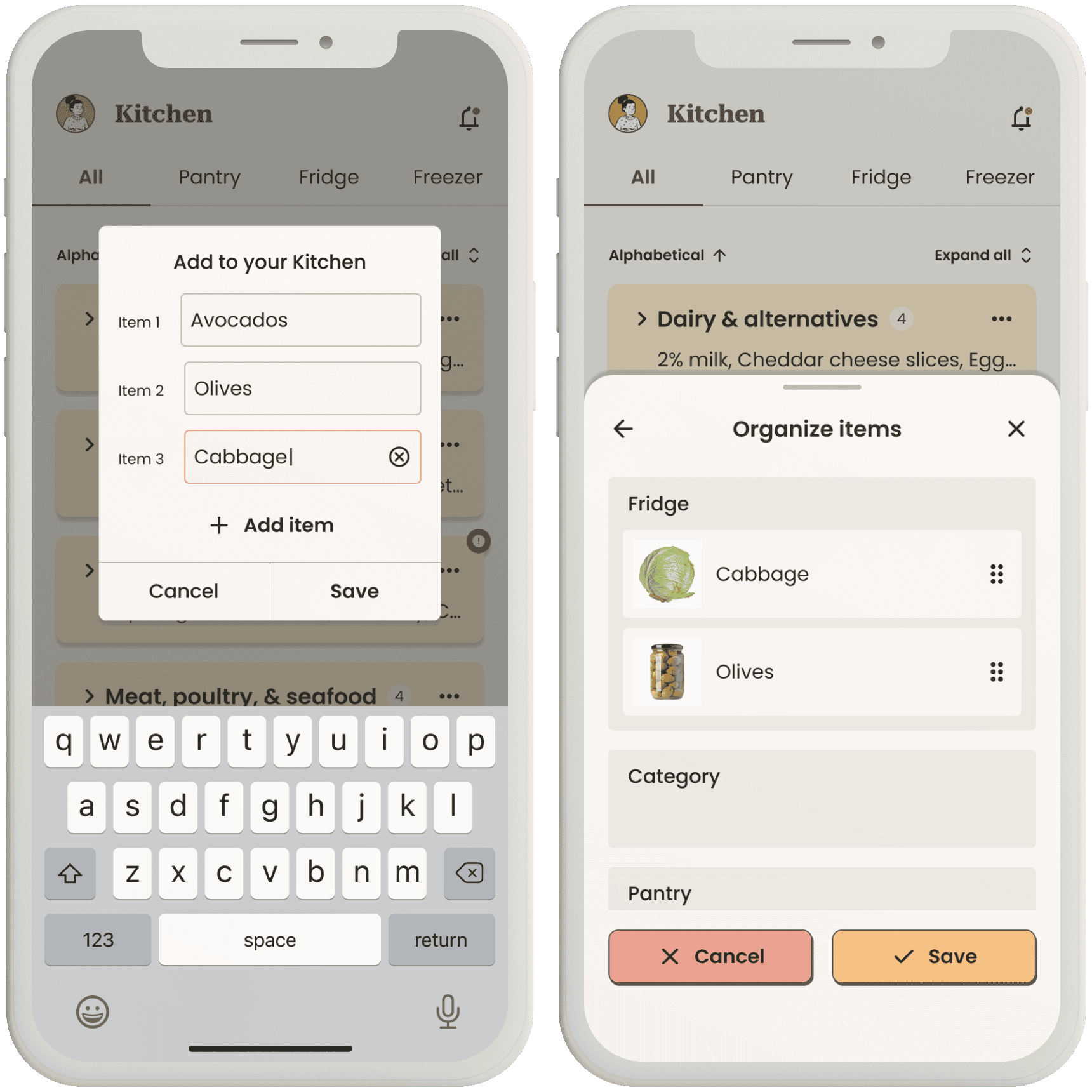
Through testing and iterations, the flow is revised to inform the user better and allow them to correct AI mistakes.
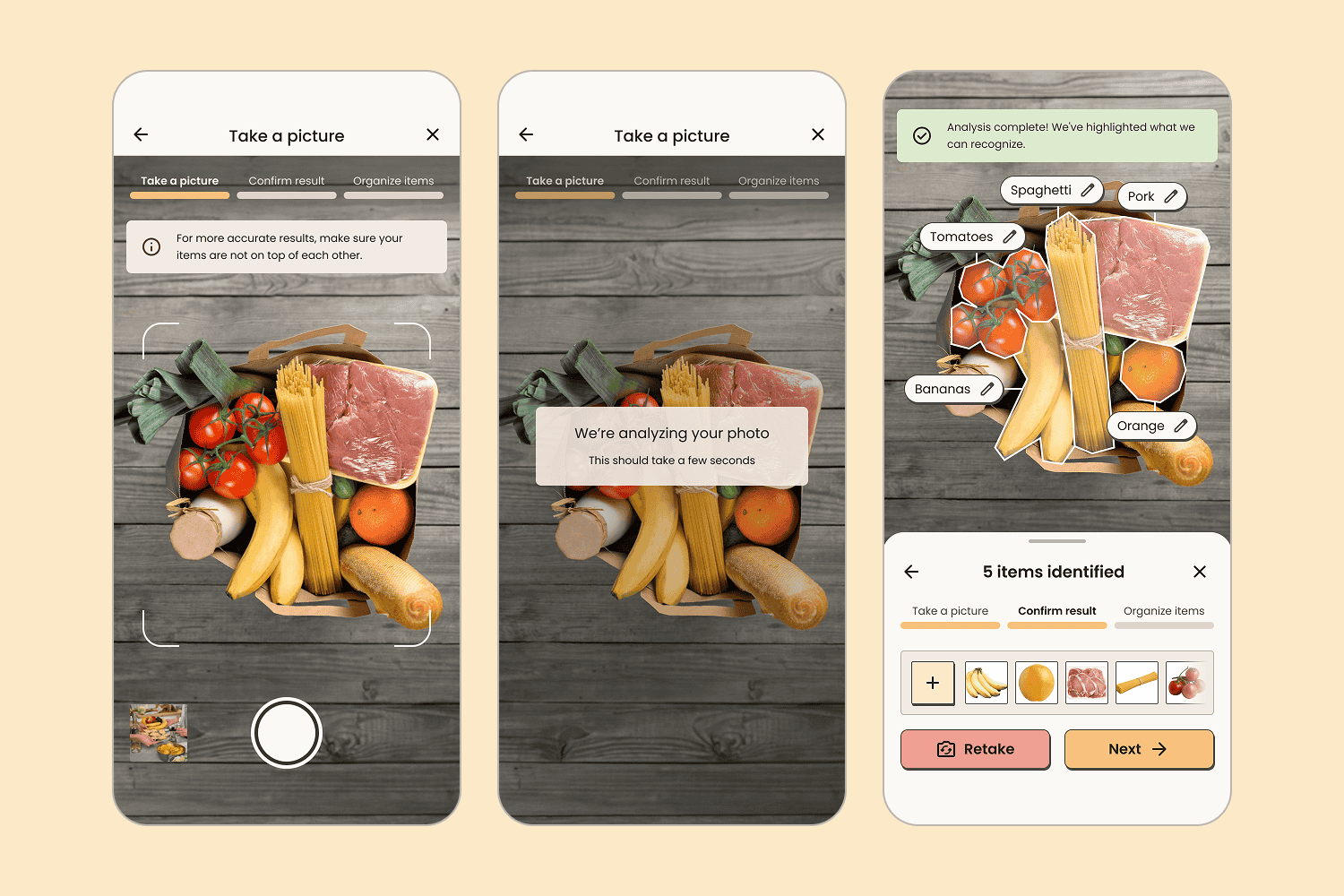
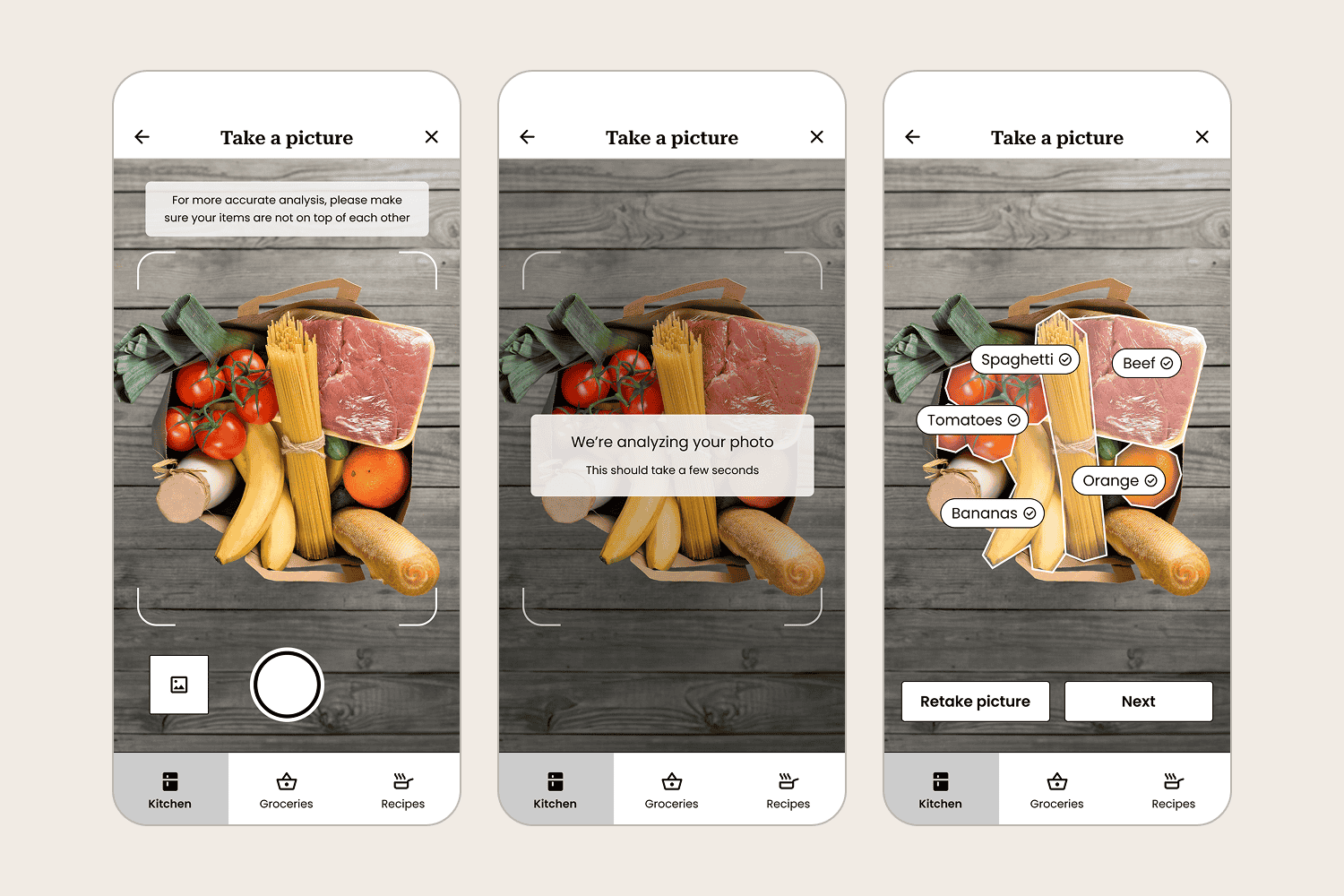
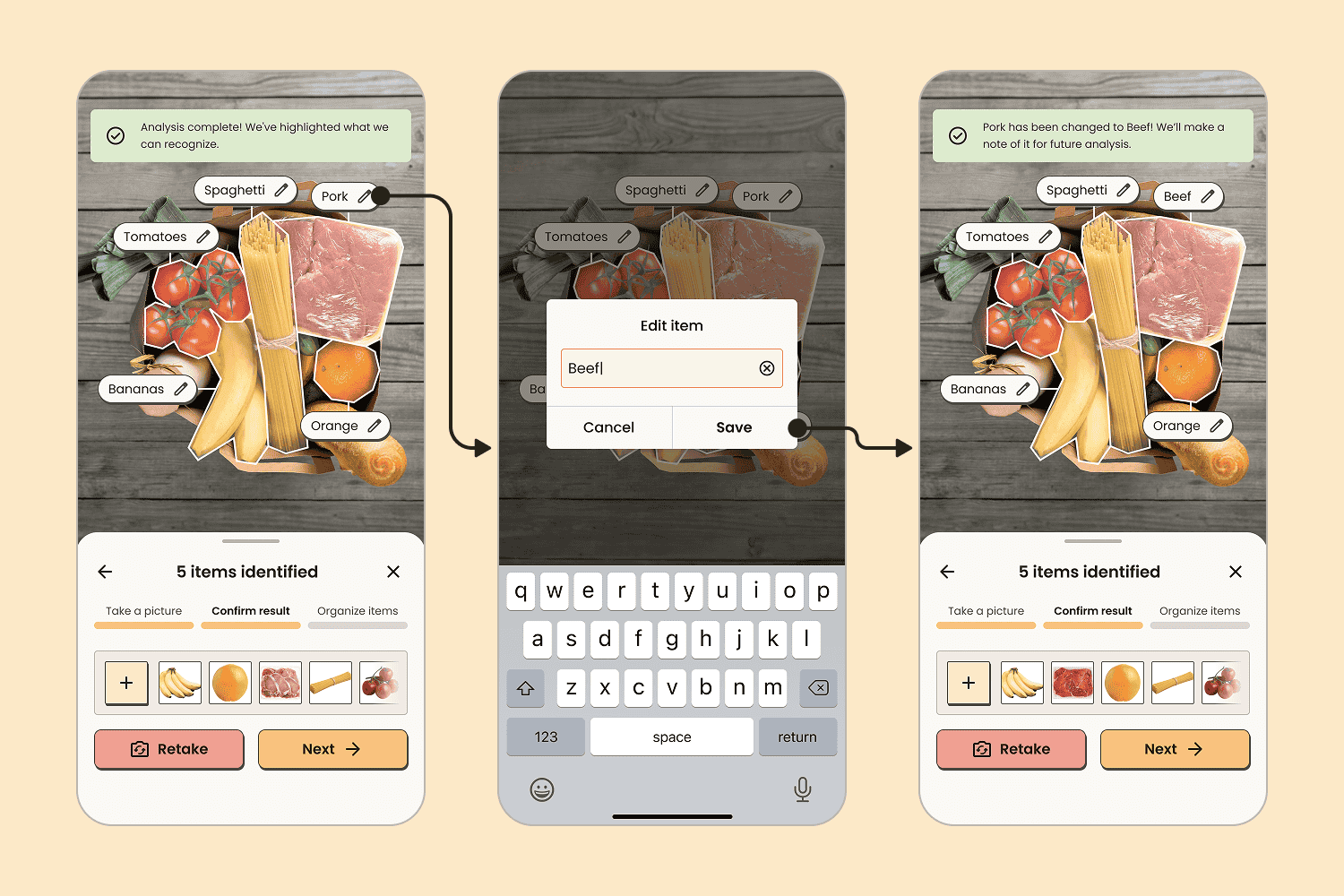
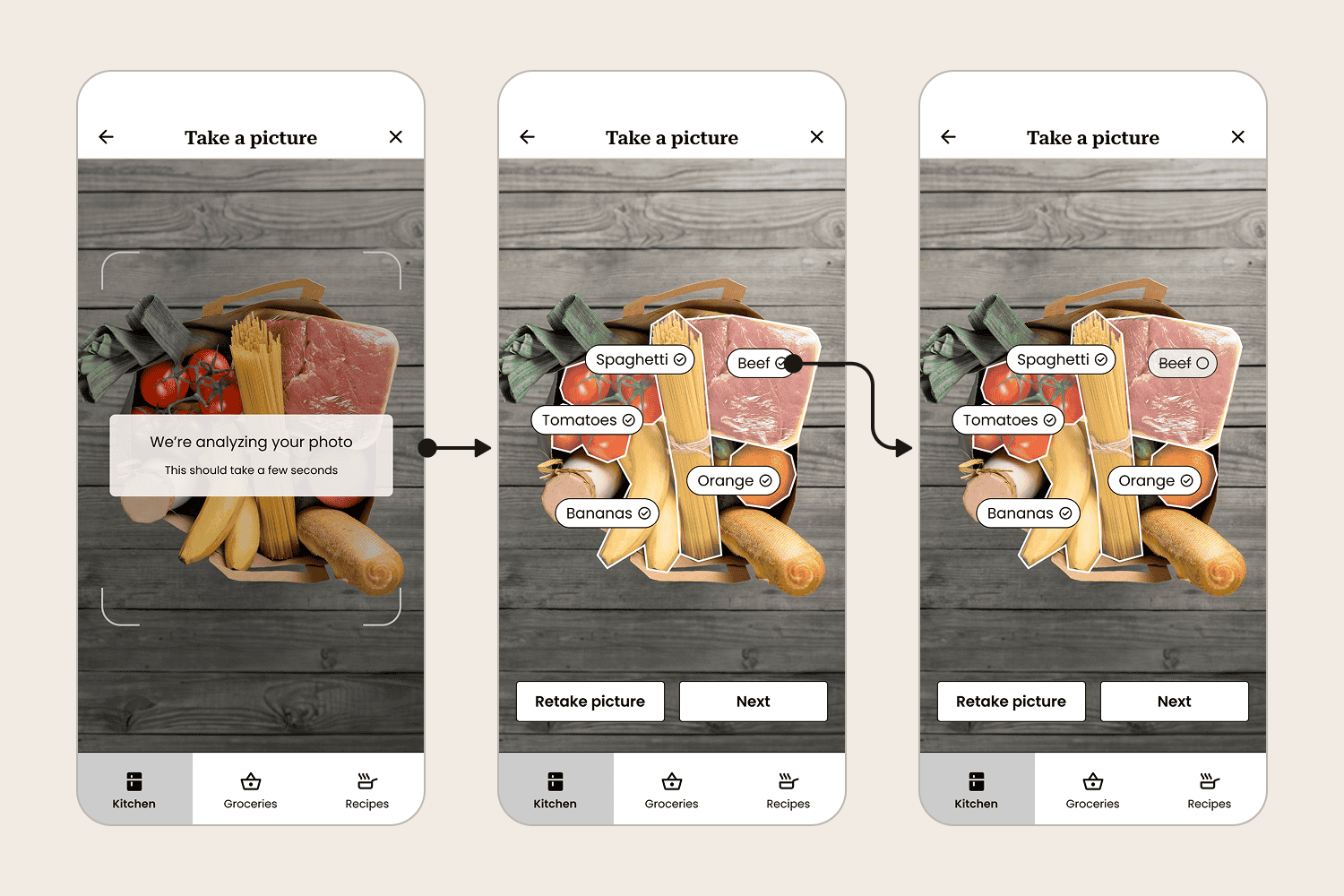
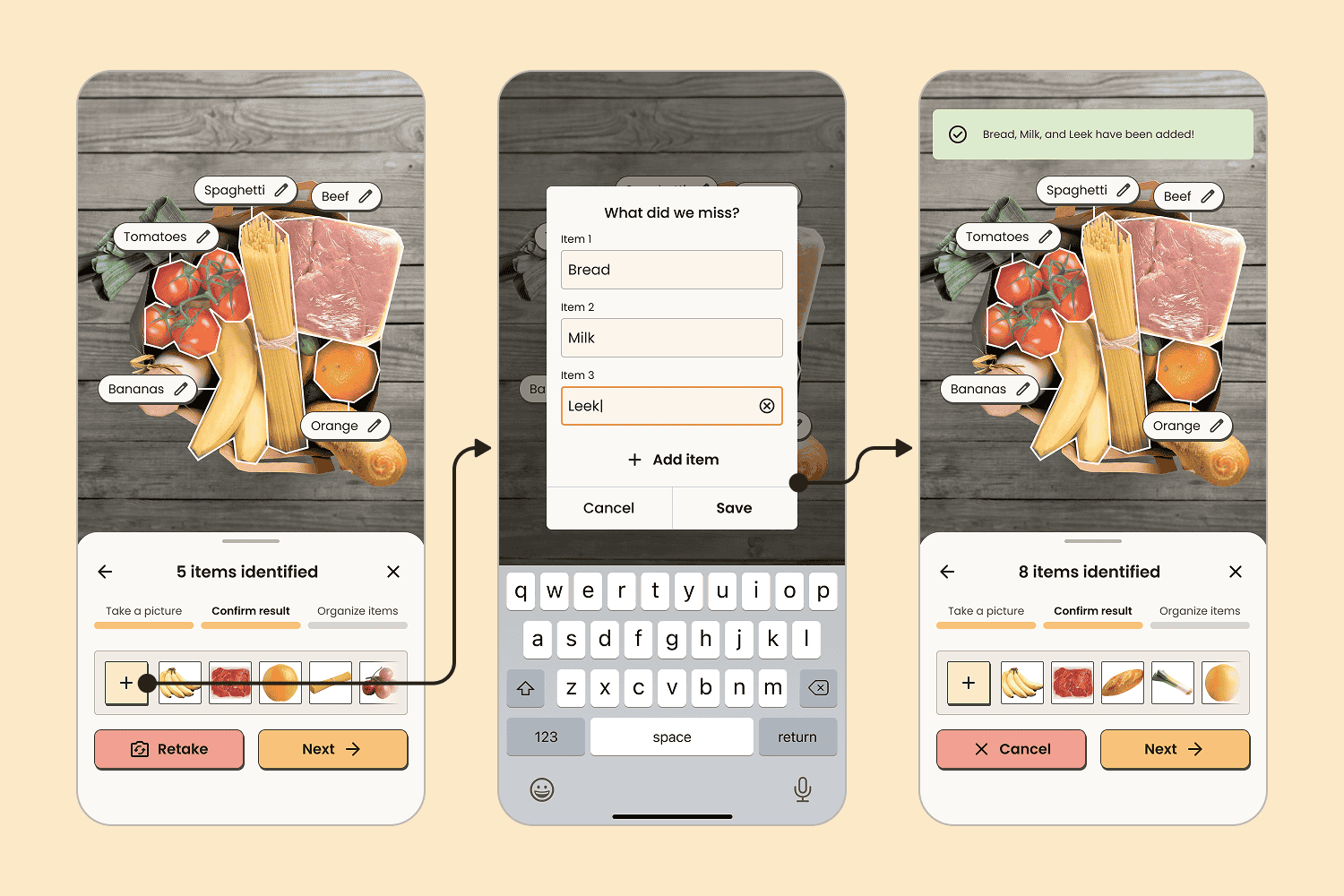
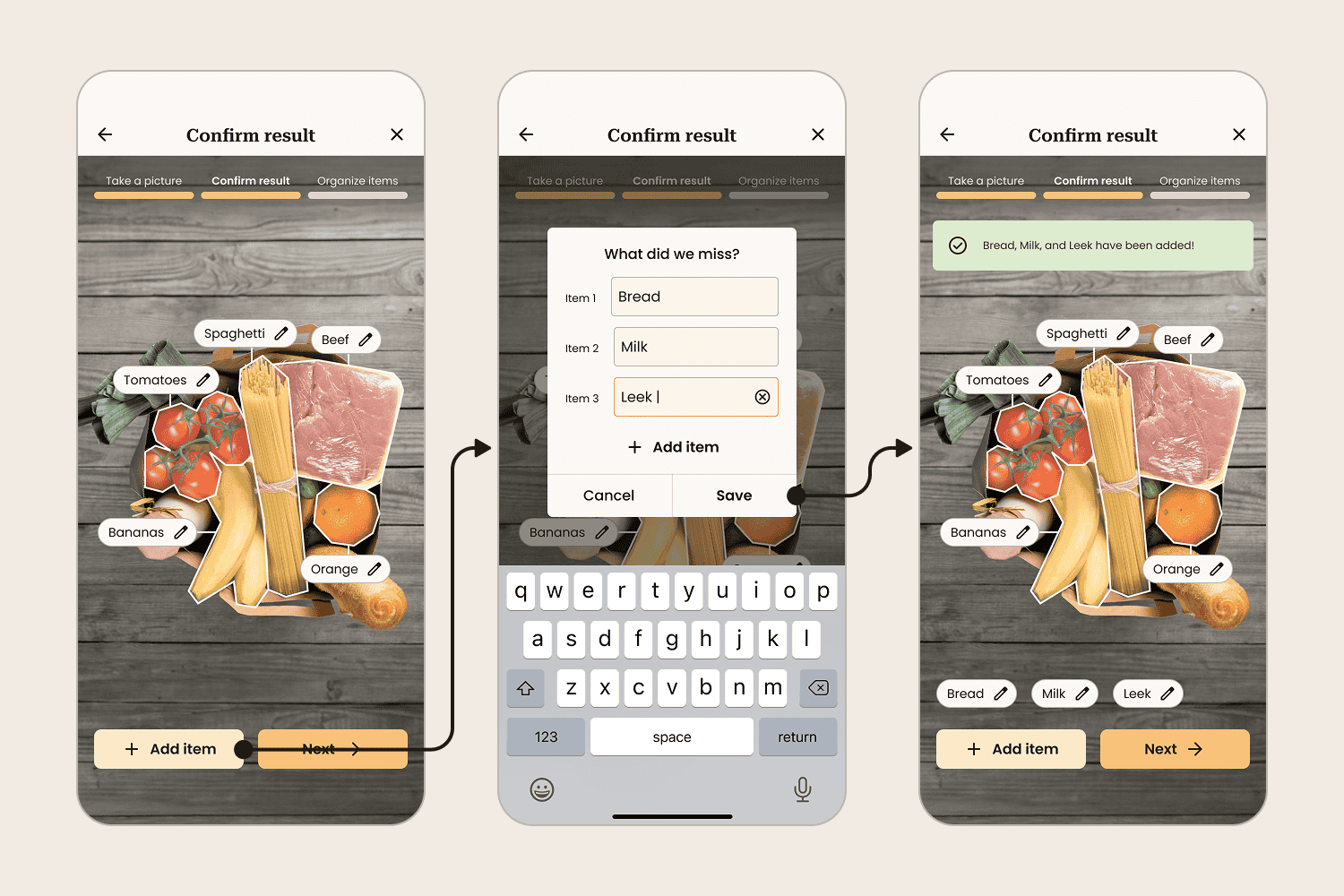
Image recognition can be more convenient, but allowing multiple entry points increases flexibility and provides a fallback if AI fails.
Use case 2
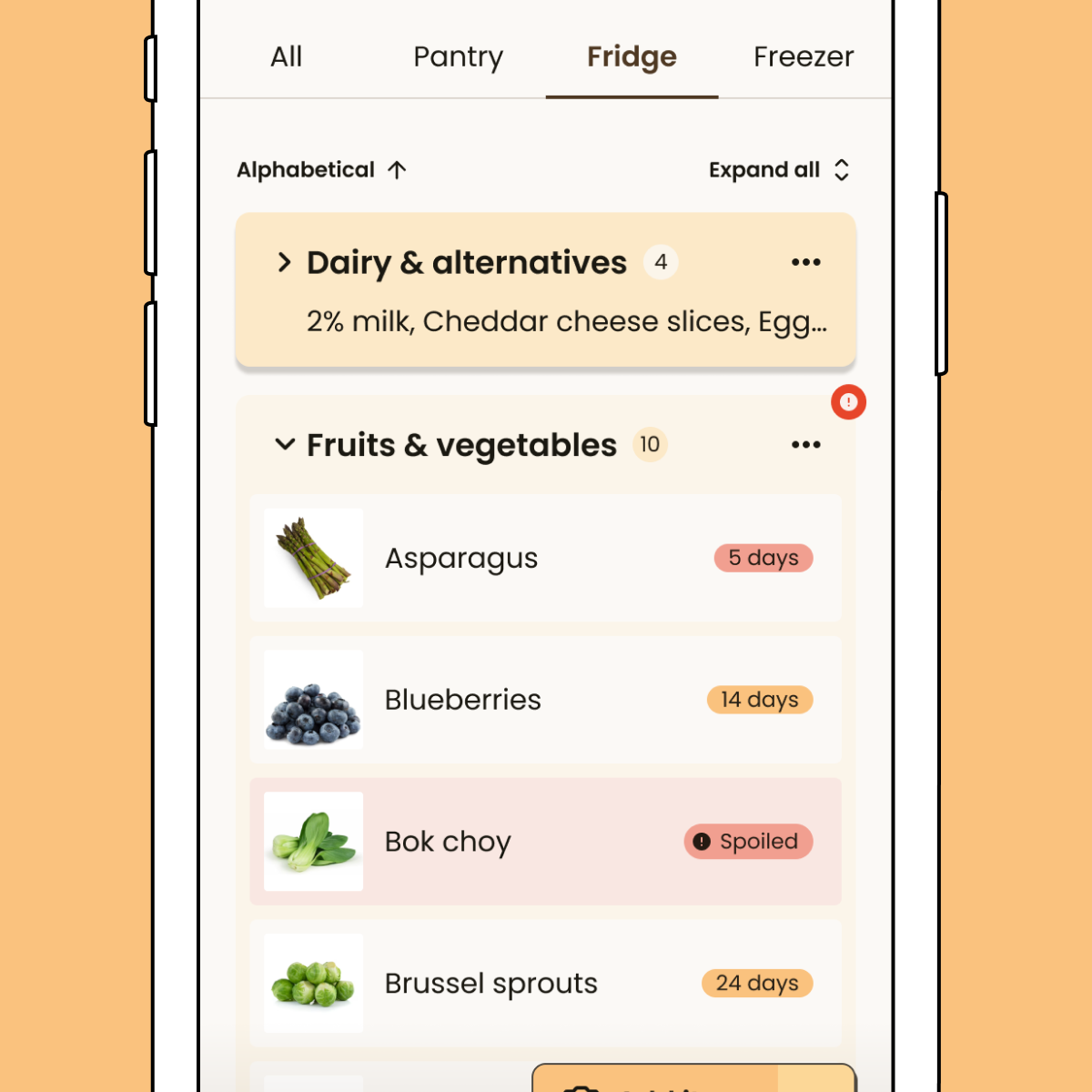
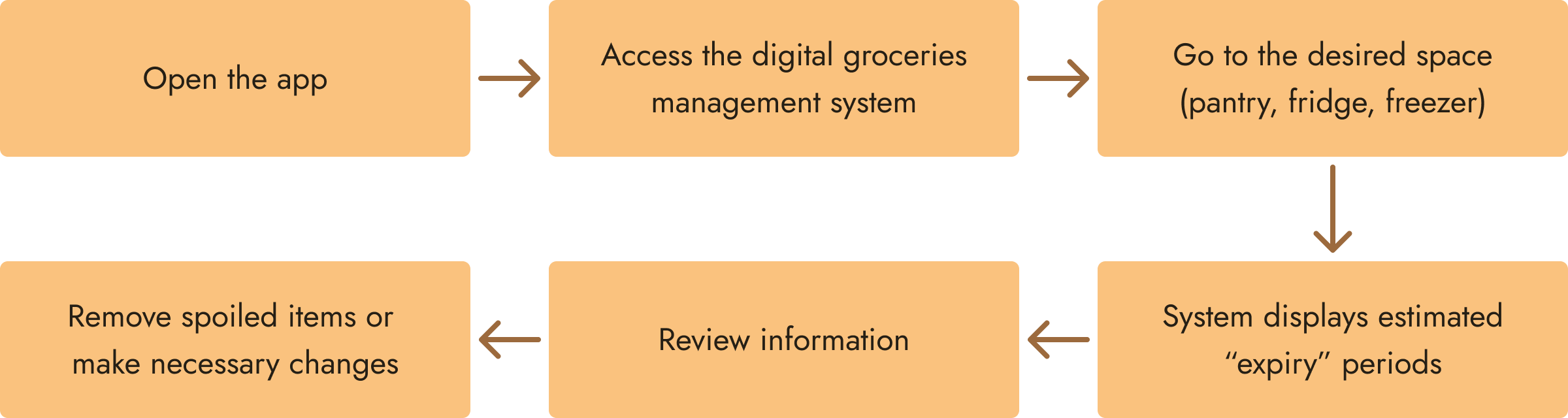
Managing groceries digitally
User story
As a student, I want to keep track of the groceries I have at home so I can plan my meals accordingly and avoid food waste.
Preconditions
The user has installed the app on their phone and has added items.
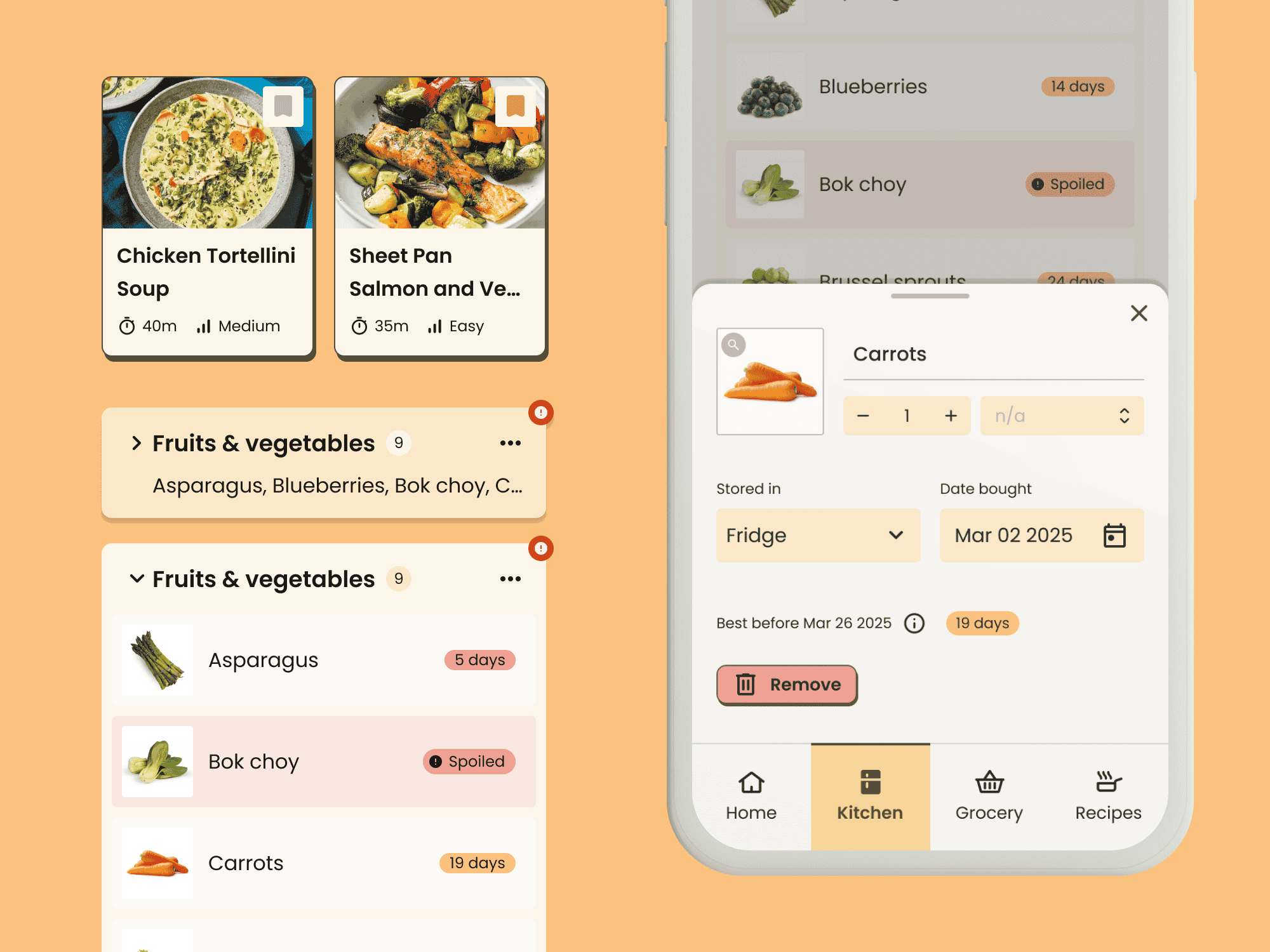
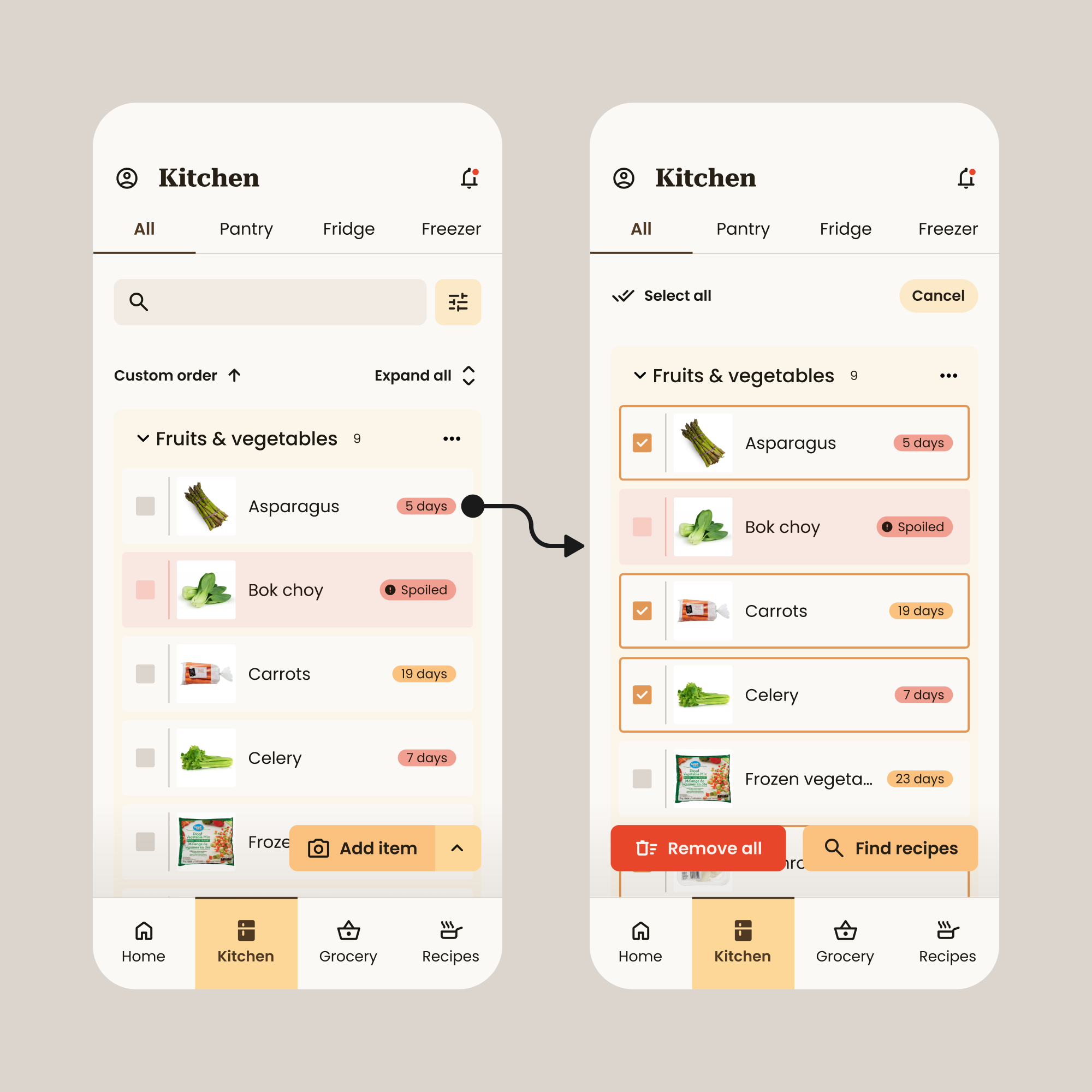
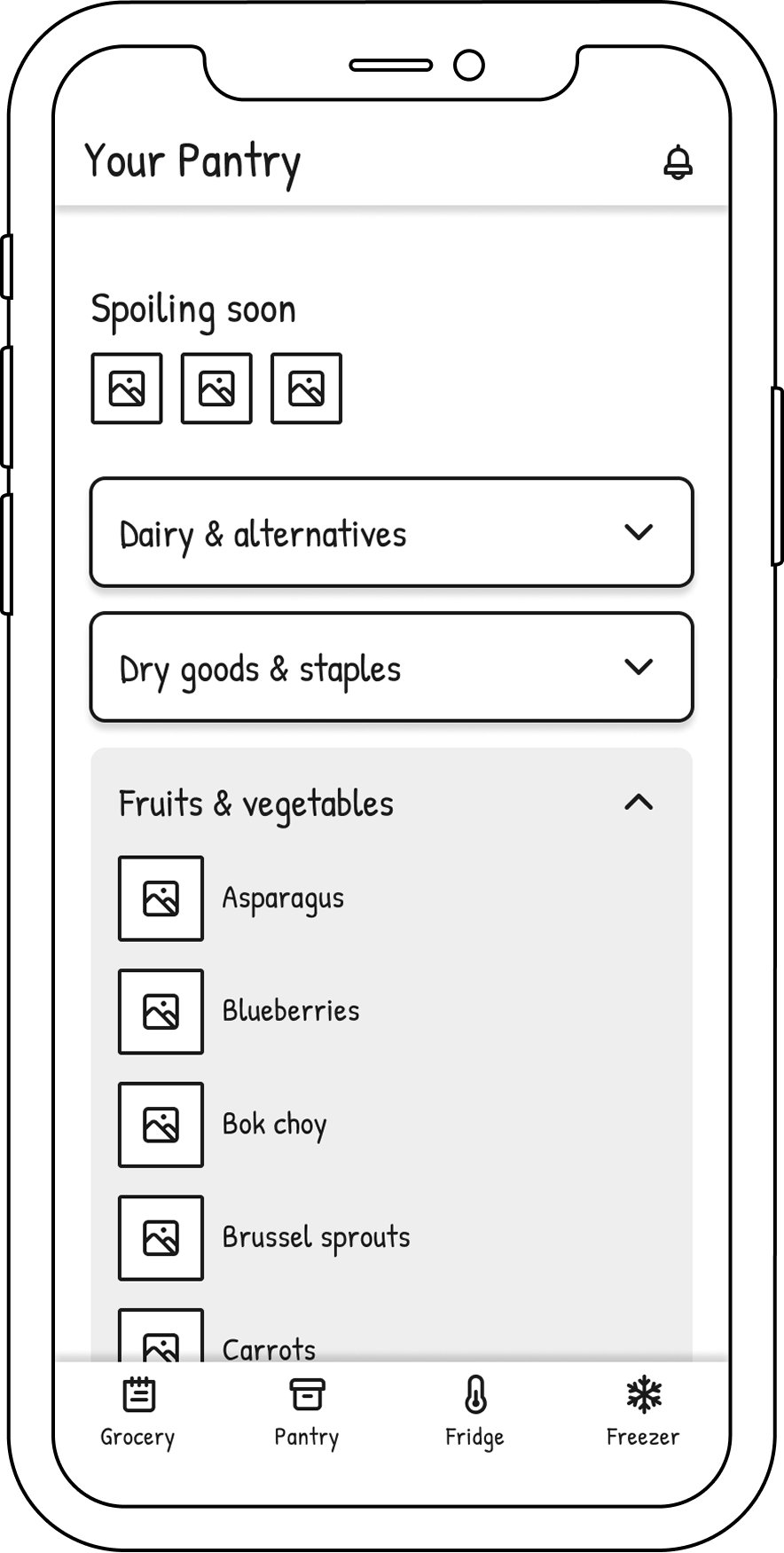
I refined how information is organized and displayed to provide the user with enough information at a glance.
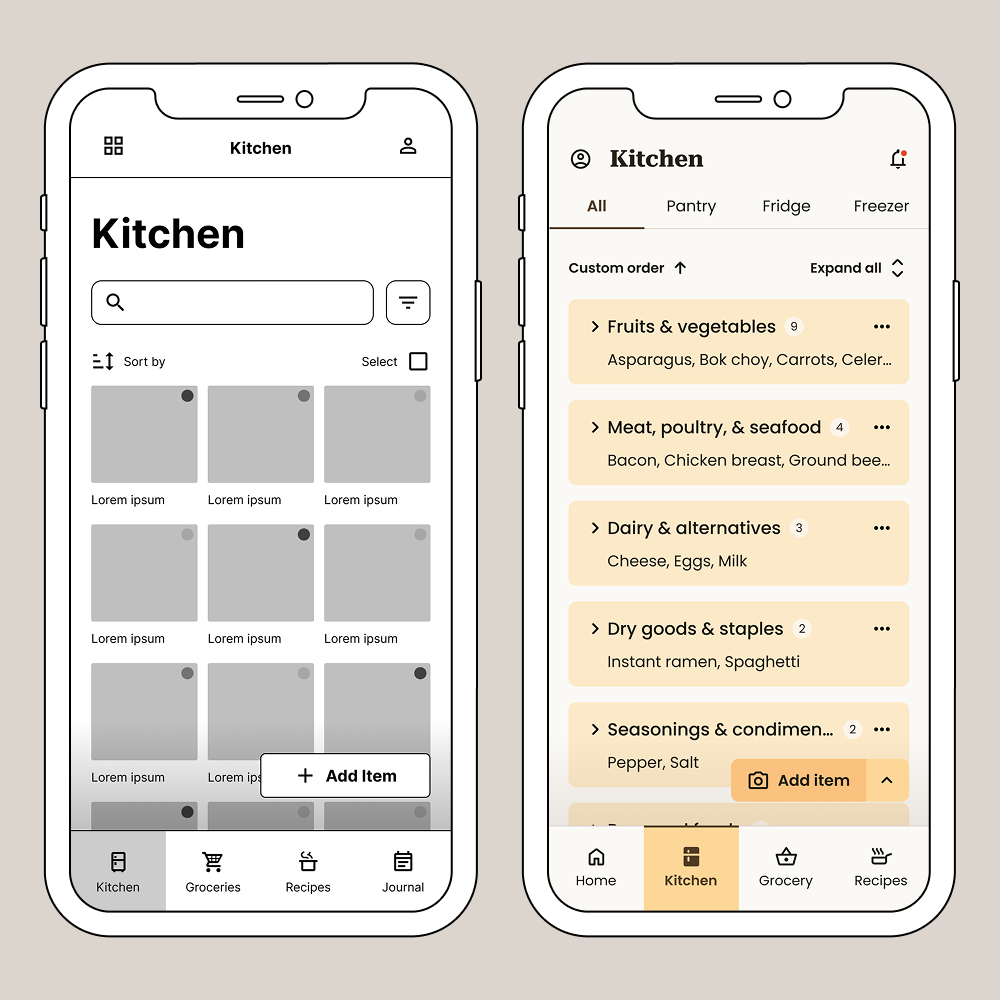
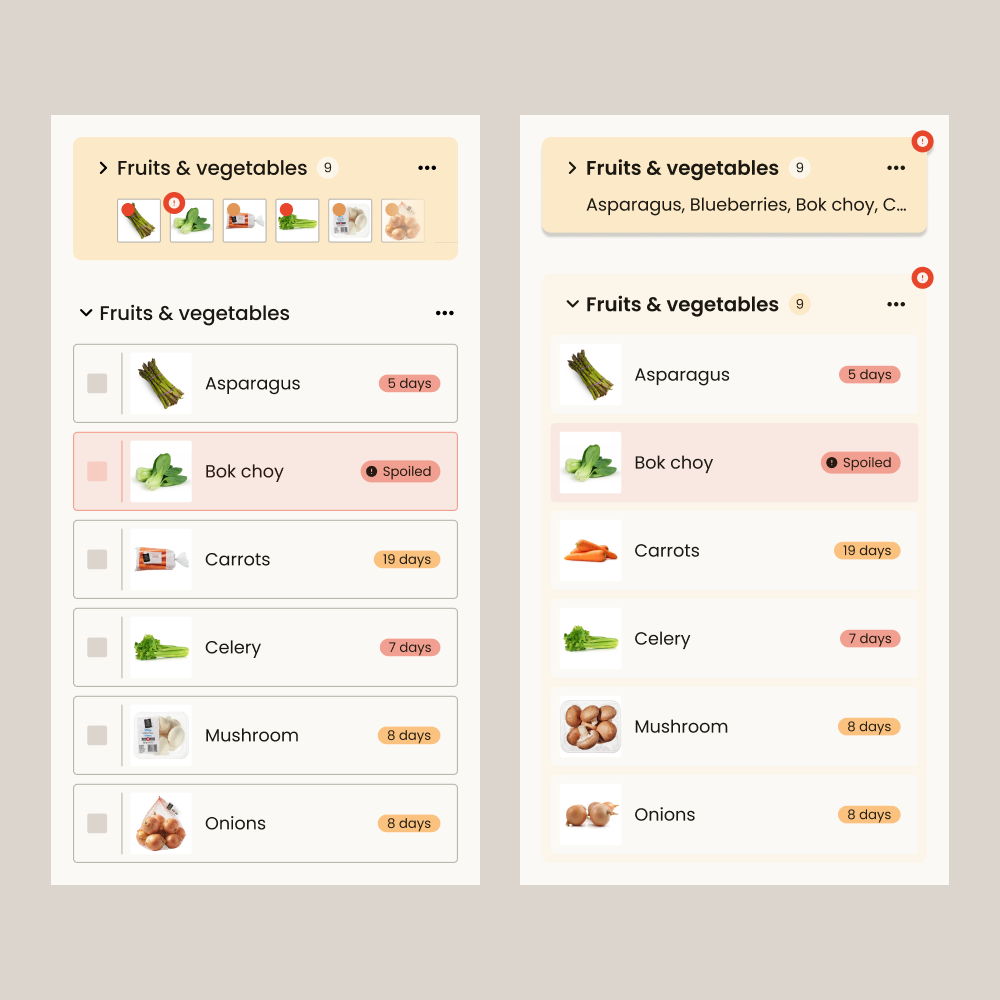
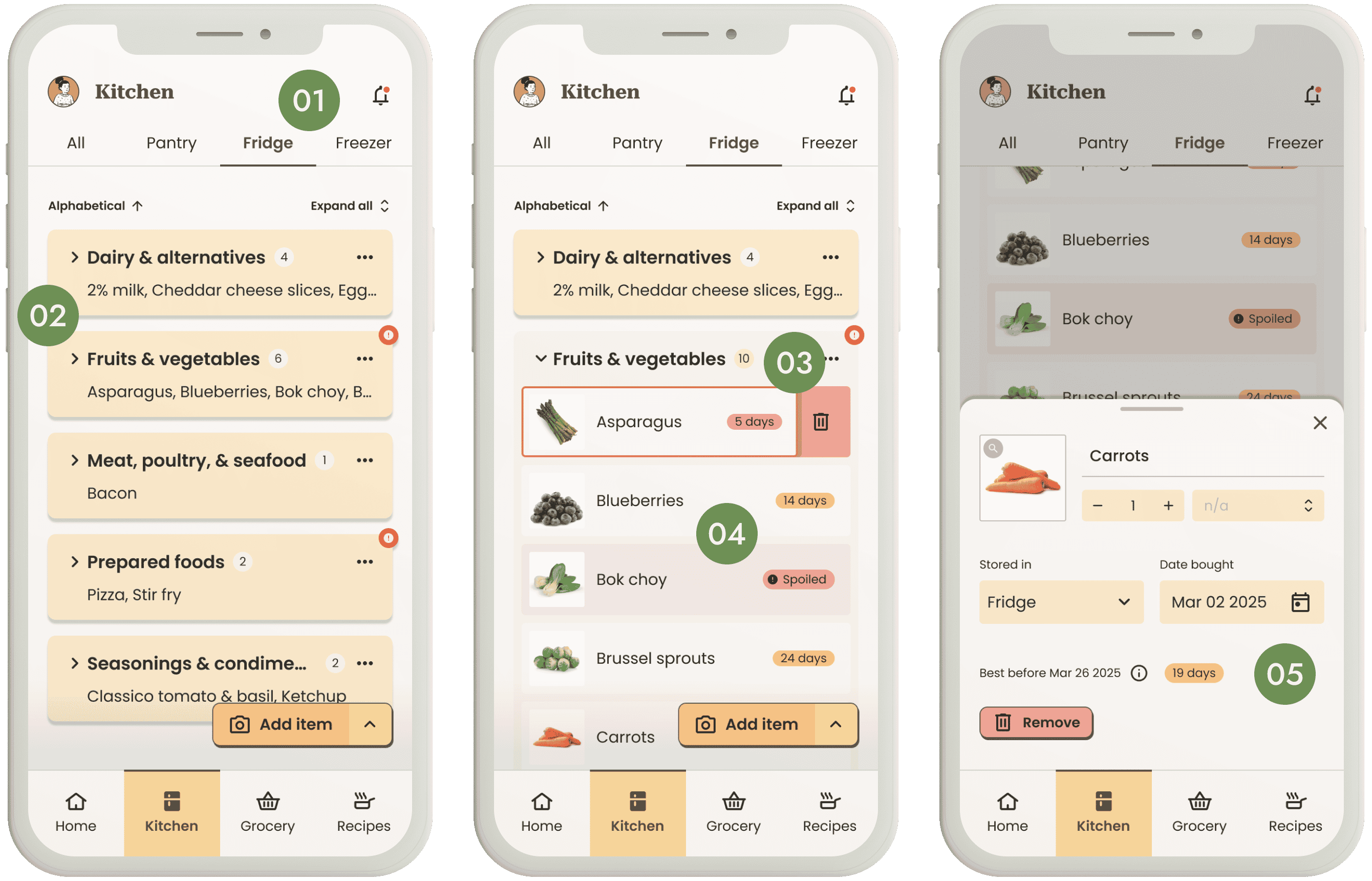
Groceries management is made simpler through these design decisions...
- Organize by storage space, then by food group
- Alert the user of potential spoilage
- Easy swipe-to-delete action
- Call out spoiled items or those close to spoiling
- Allow the user to add more information if needed
Use case 3
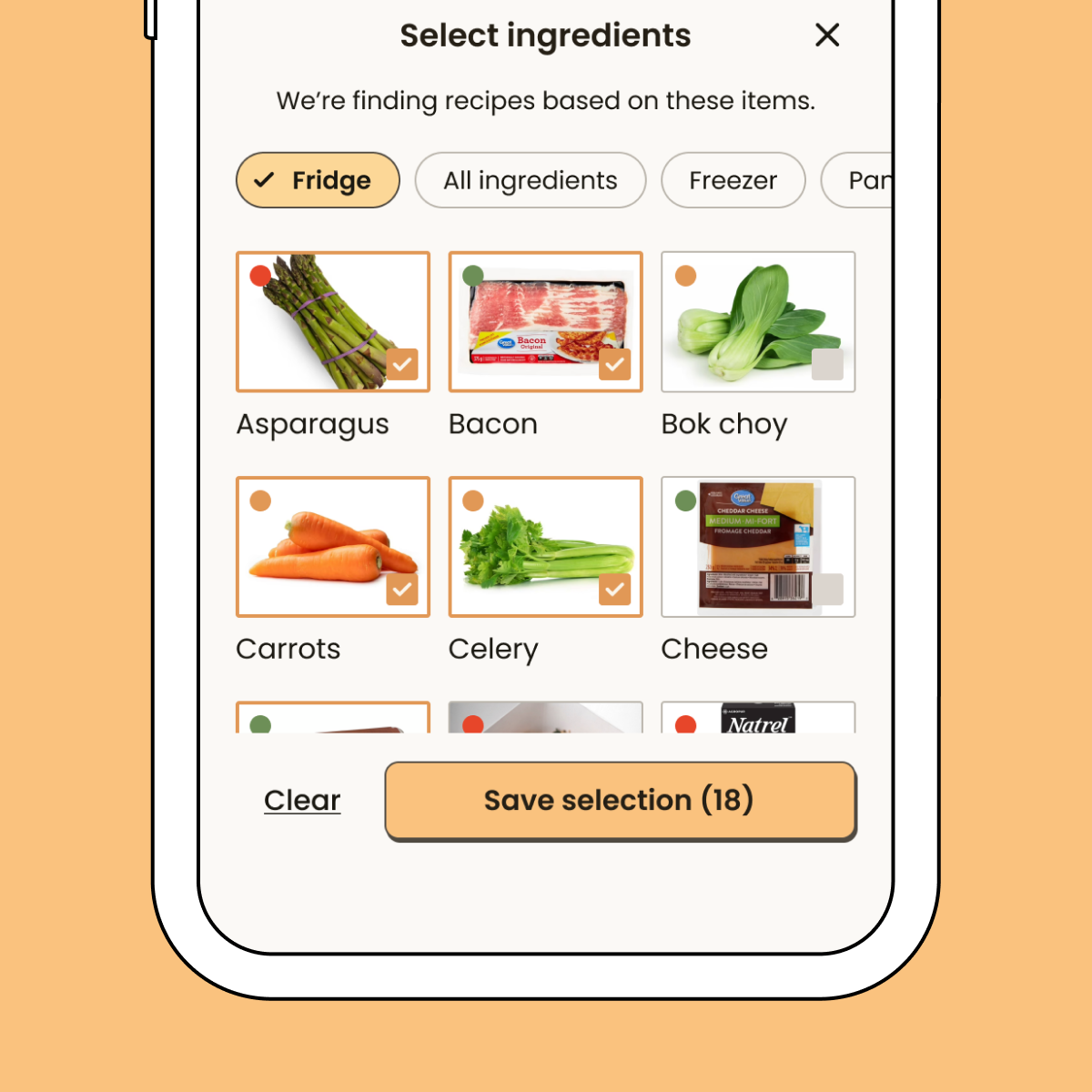
Finding recipes based on available ingredients
User story
As a student, I want to find recipes based on the ingredients I have so I can make more varied meals and avoid wasting food.
Preconditions
The user has installed the app on their phone and has added items.
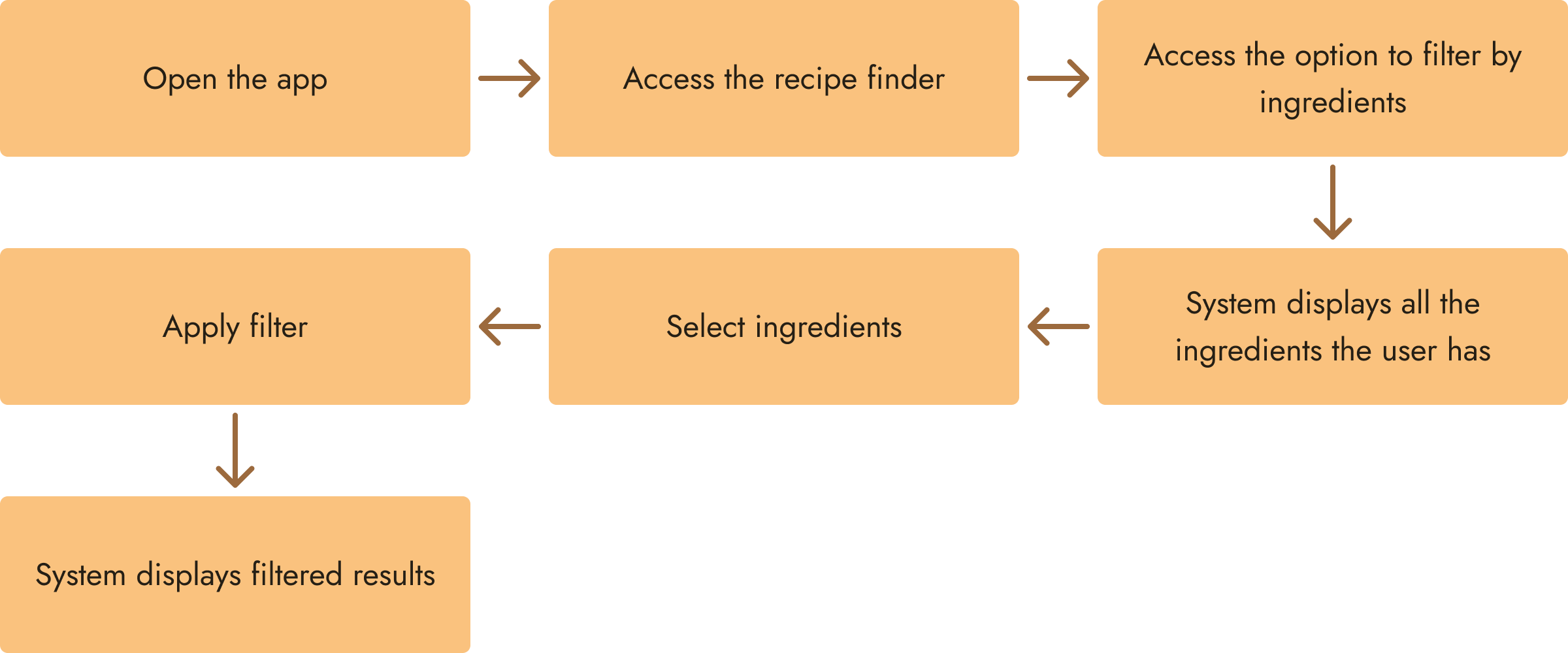
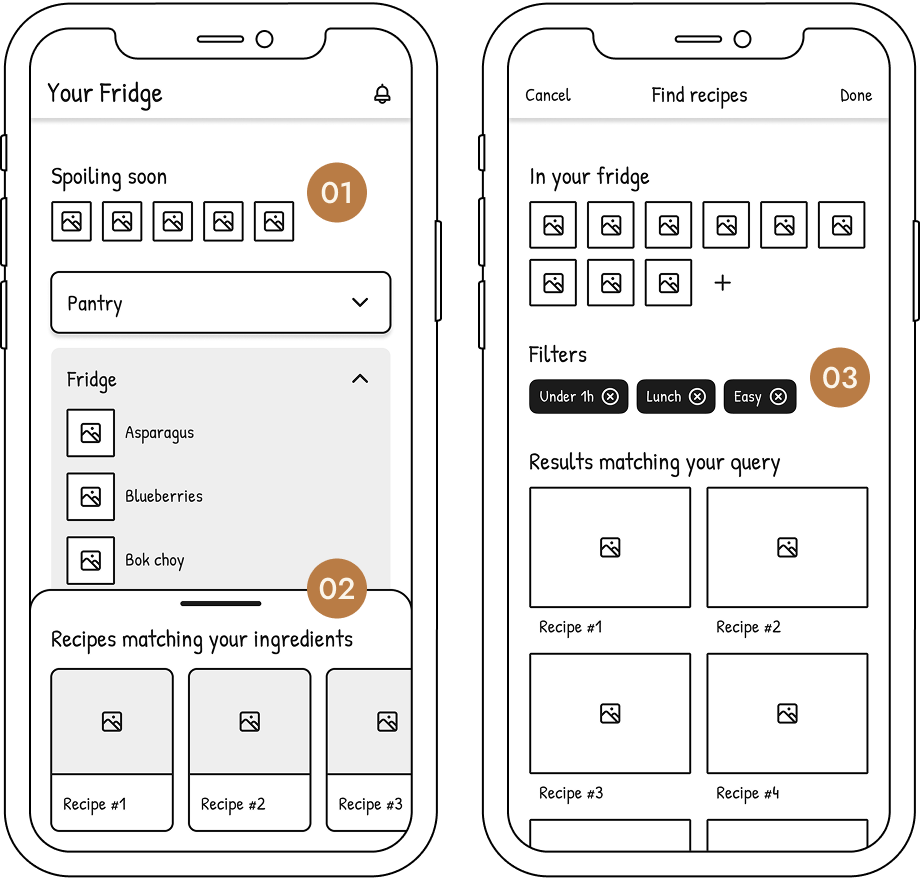
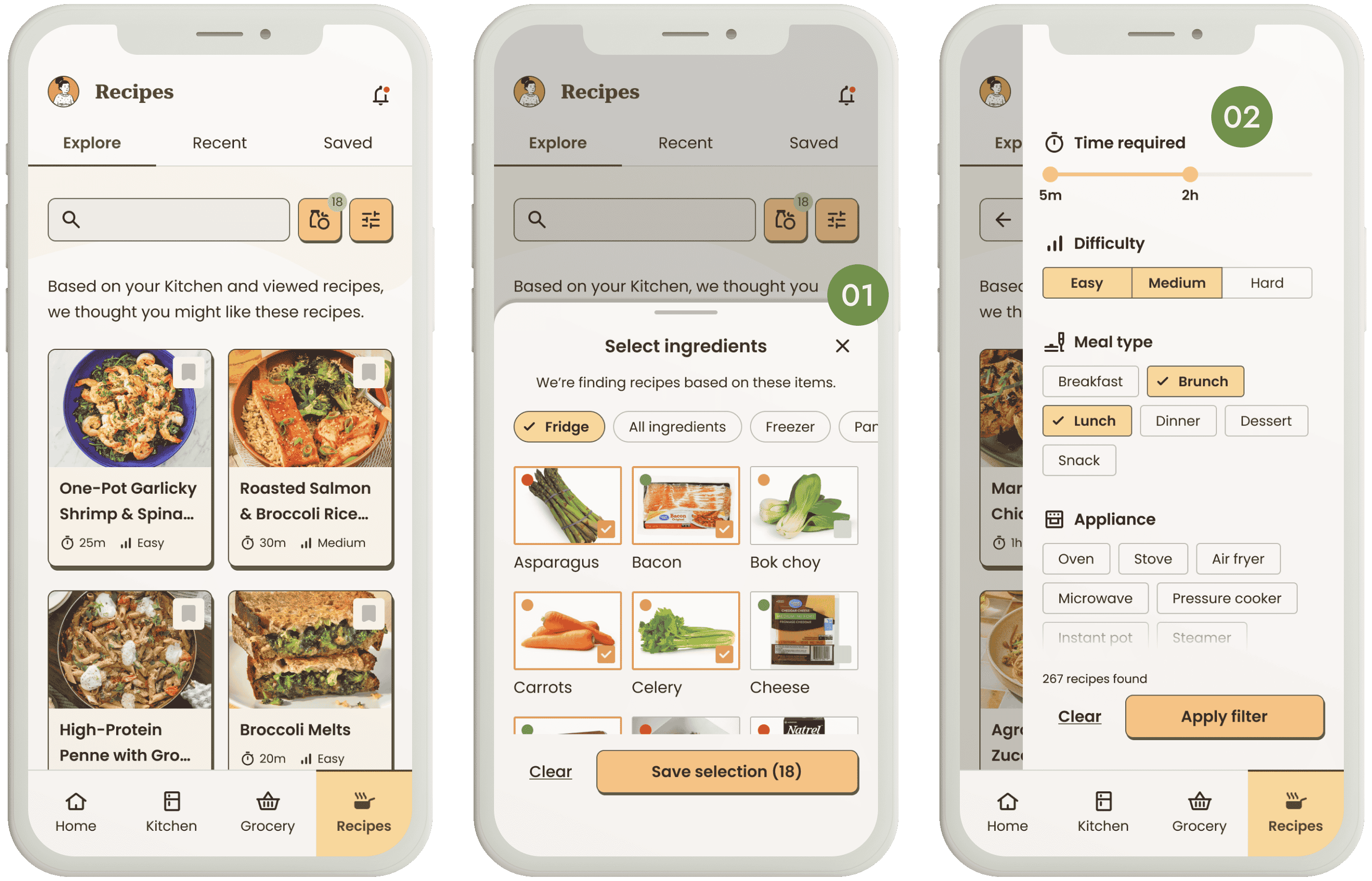
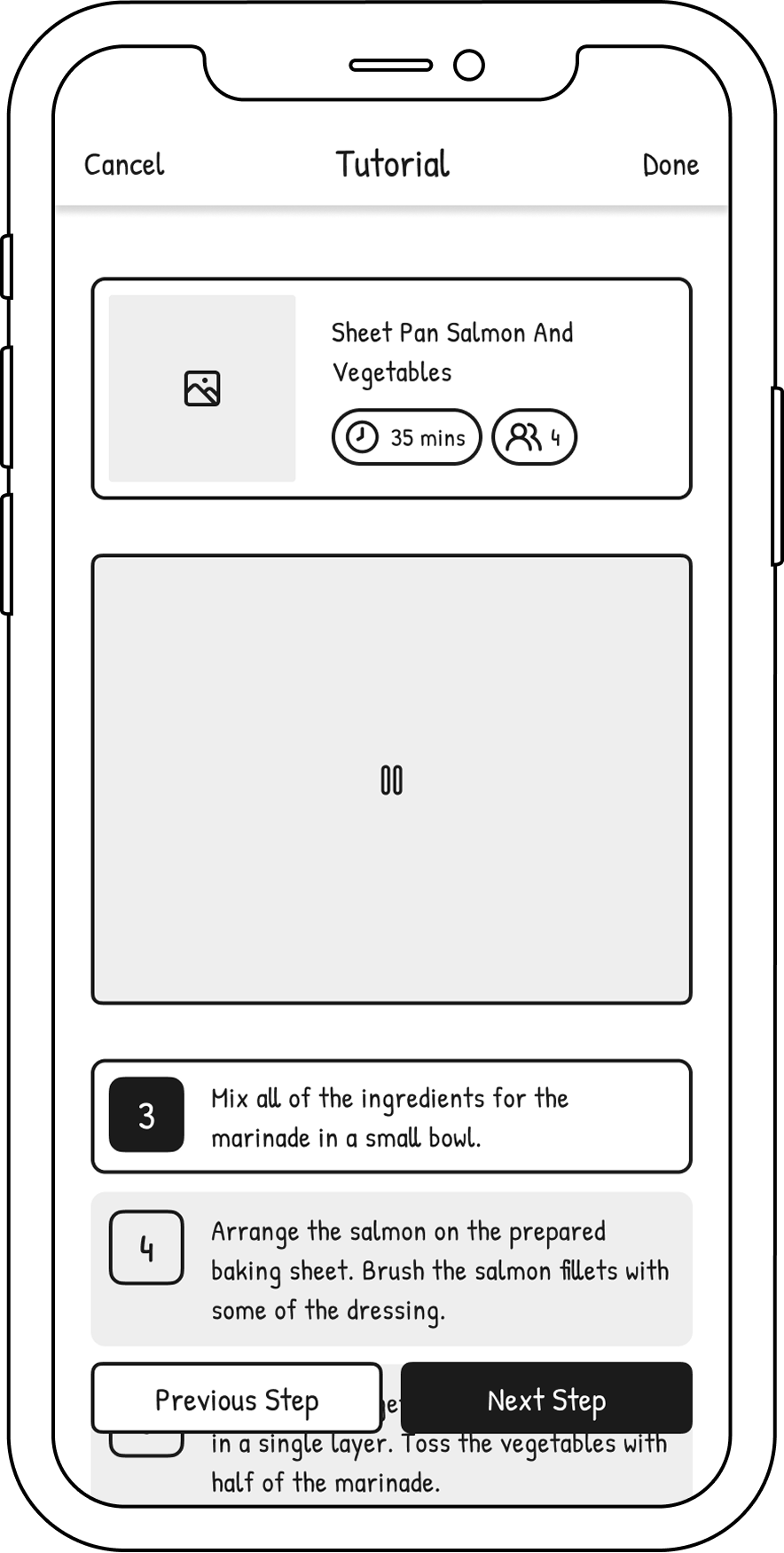
This flow initially started in the Kitchen space to mimic the physical actions of looking in the fridge and getting ingredients.
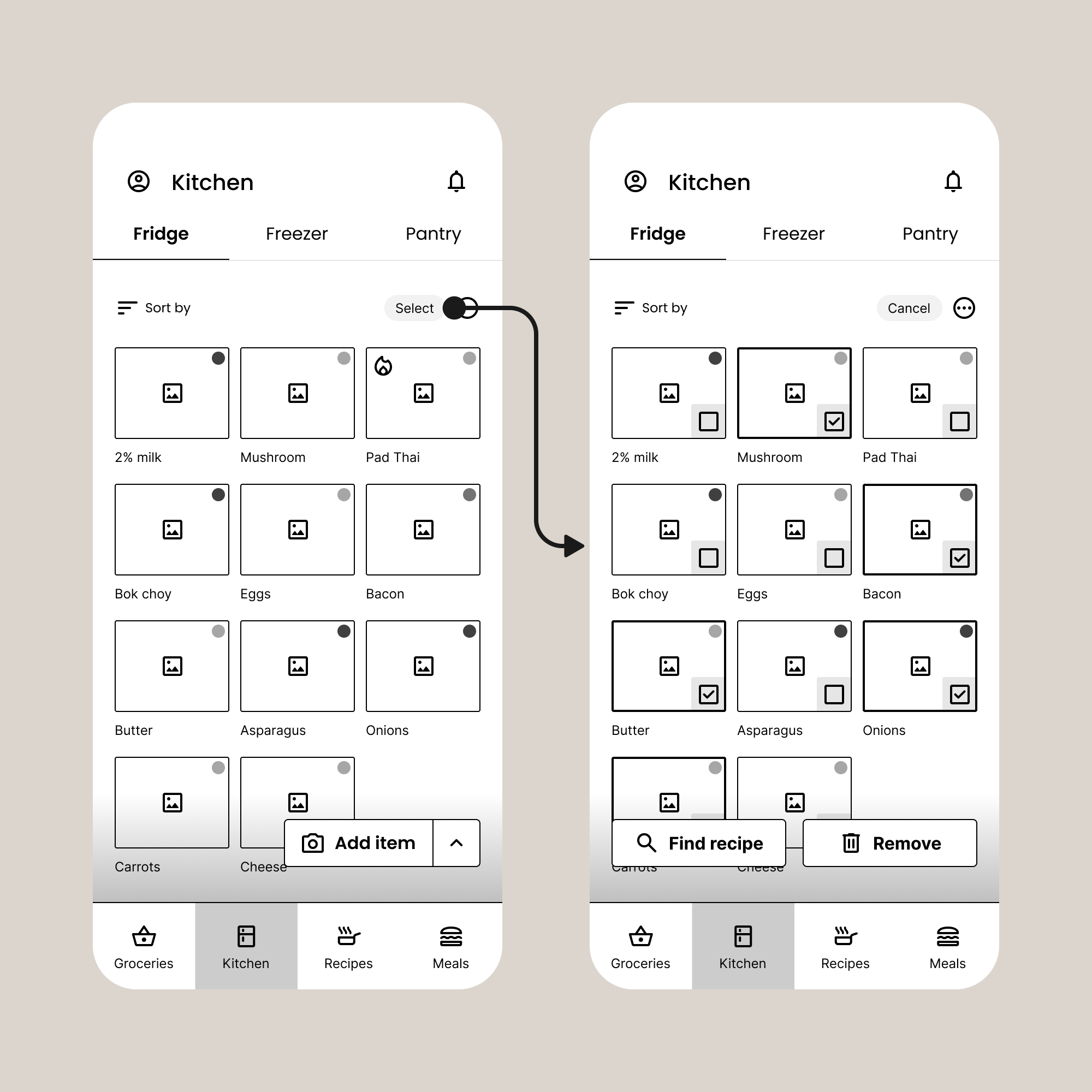
However, during testing, I saw that having this flow act as another recipe filter is much more straightforward.
When looking for recipes, users can filter by ingredients (1) and by preferences (2).
Design library
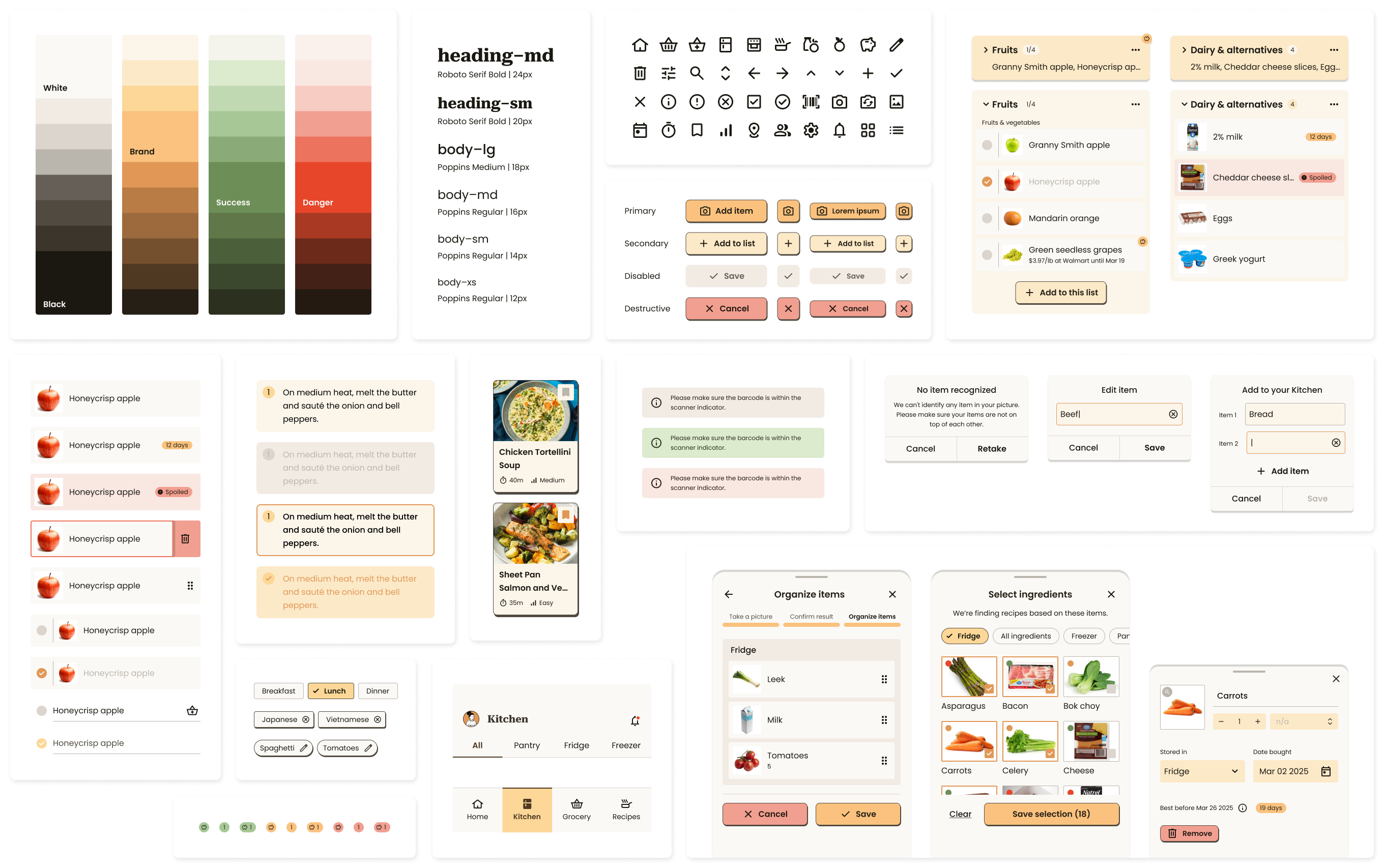
As the design progressed, I developed and documented a design library to ensure consistency across screens.
I conducted visual preference testing with three style tiles compiled based on research into visual marketing strategies. Test participants generally preferred warm colours, a welcoming and organic aesthetic, a sense of structure, and the homey feeling of serif fonts. I used Figma variables, styles, and components to build out a design library and expedite the design process.
Next steps
EatWell can be refined and improved, especially in a more creative and engaging direction.
Testing and prototype
Previous user tests occurred quickly to accommodate the time constraint. I want to conduct a proper usability test with a more functional and robust Protopie prototype to continue refining the app and improving it for users.
Visual direction and engagement
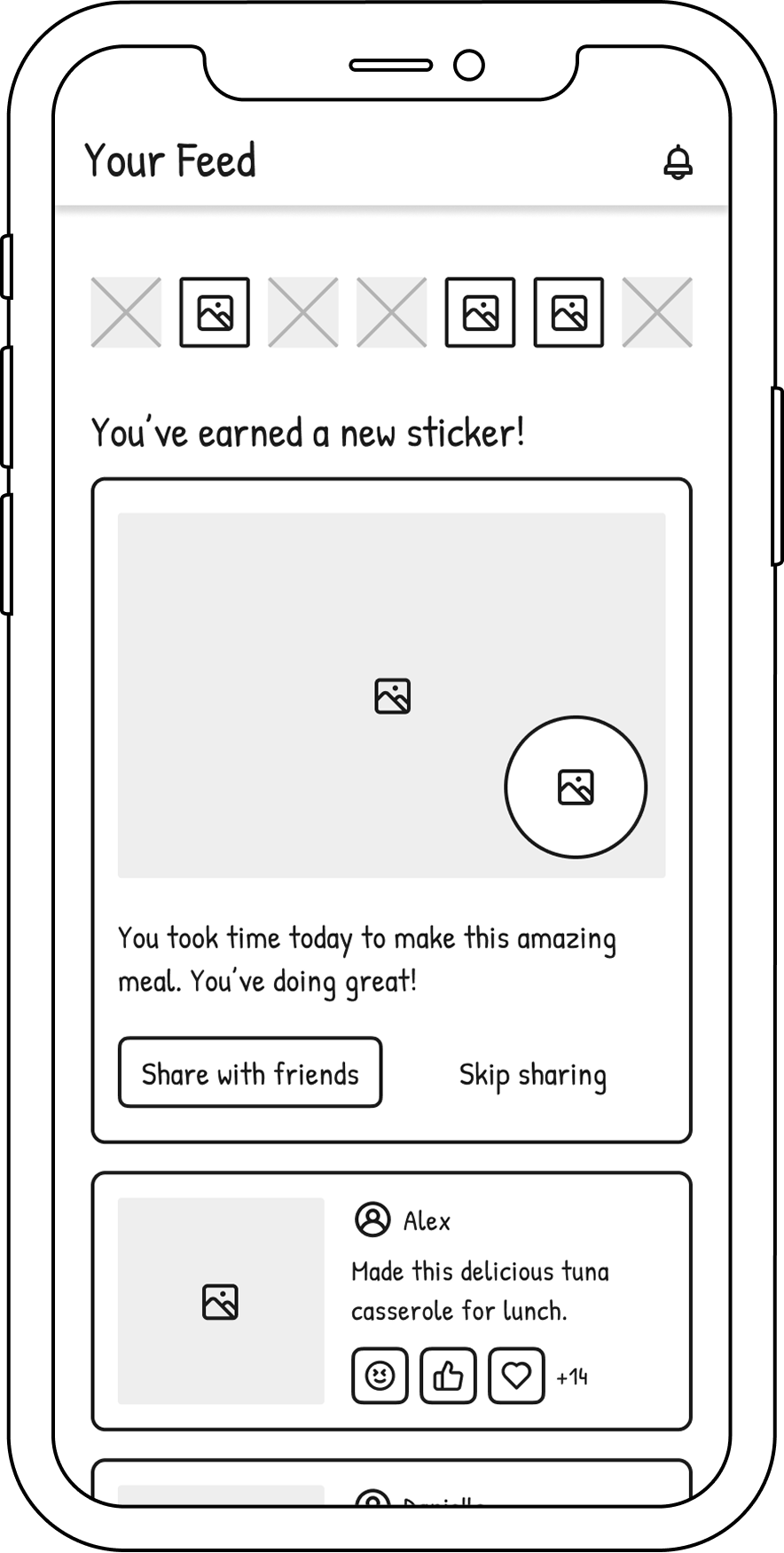
EatWell needs a proper visual identity, and it should be playful and welcoming. A companion character could make the experience more engaging and enjoyable, and aligns with the original playful direction that was excluded due to time constraints.
Incorporate nutrition information
Going back to the initial goal of improving understanding of nutrition, I want to explore effective learning methods and incorporate nutrition information in a stress-free and non-intrusive manner. The categorization of items by food groups opens up possibilities to include general nutrition information.

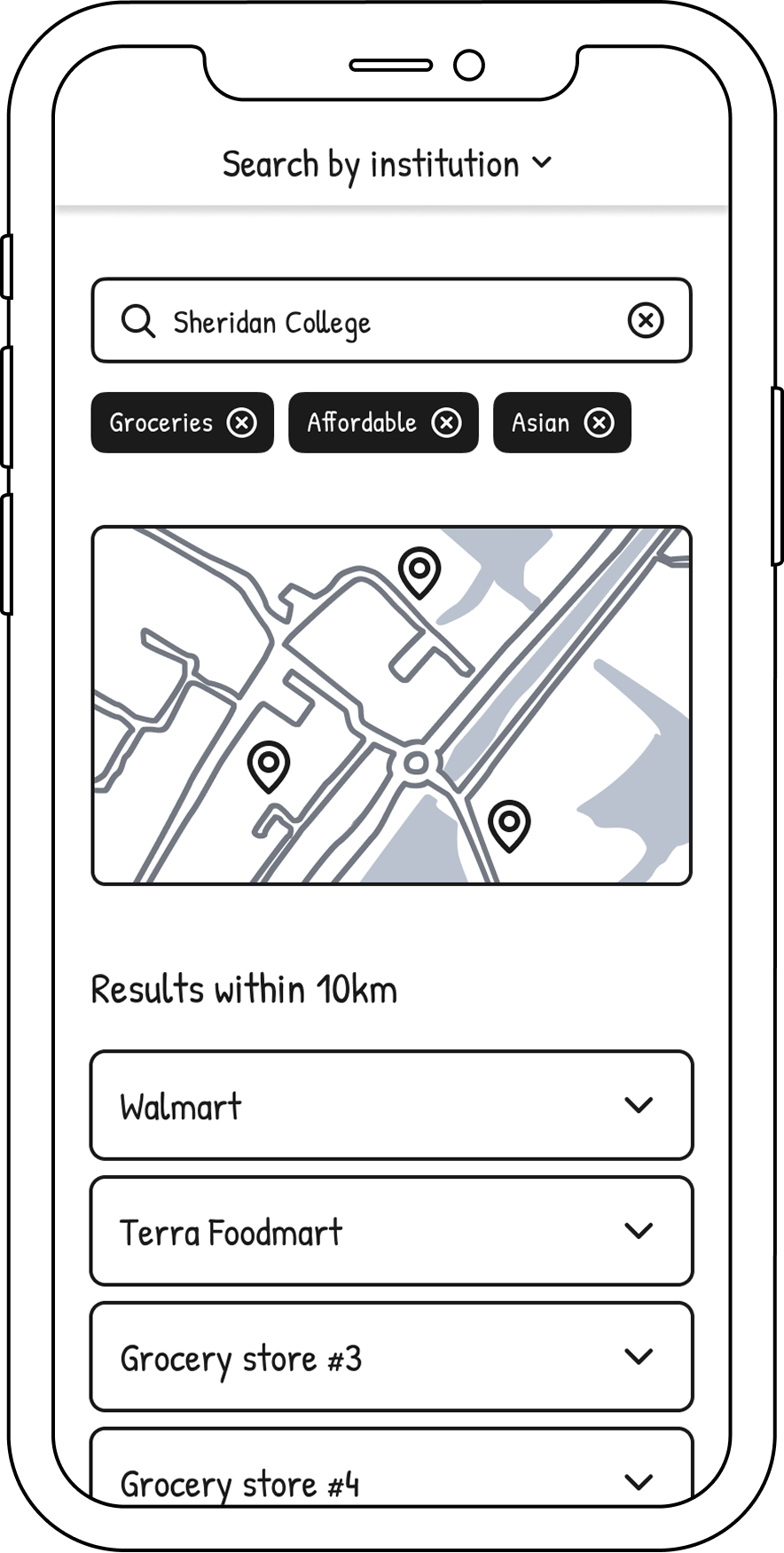
The business considerations—what better way to increase visibility to postsecondary students than institutional promotion?
EatWell can be part of a resource package for students. Since a lot of primary research was conducted at Sheridan College, I'm using Sheridan as an example.
Sheridan College's values
Sheridan Eats, the umbrella for on-campus food services, promotes sustainability, diversity, and students' wellness. These values are reflected in their events and communications on social media.
How EatWell ties in
EatWell can help reduce food waste, reduce stress in healthy activities, and make varied recipes more accessible.
The name "EatWell" actually came from Sheridan Eats and Sheridan's Well series.
Reflection
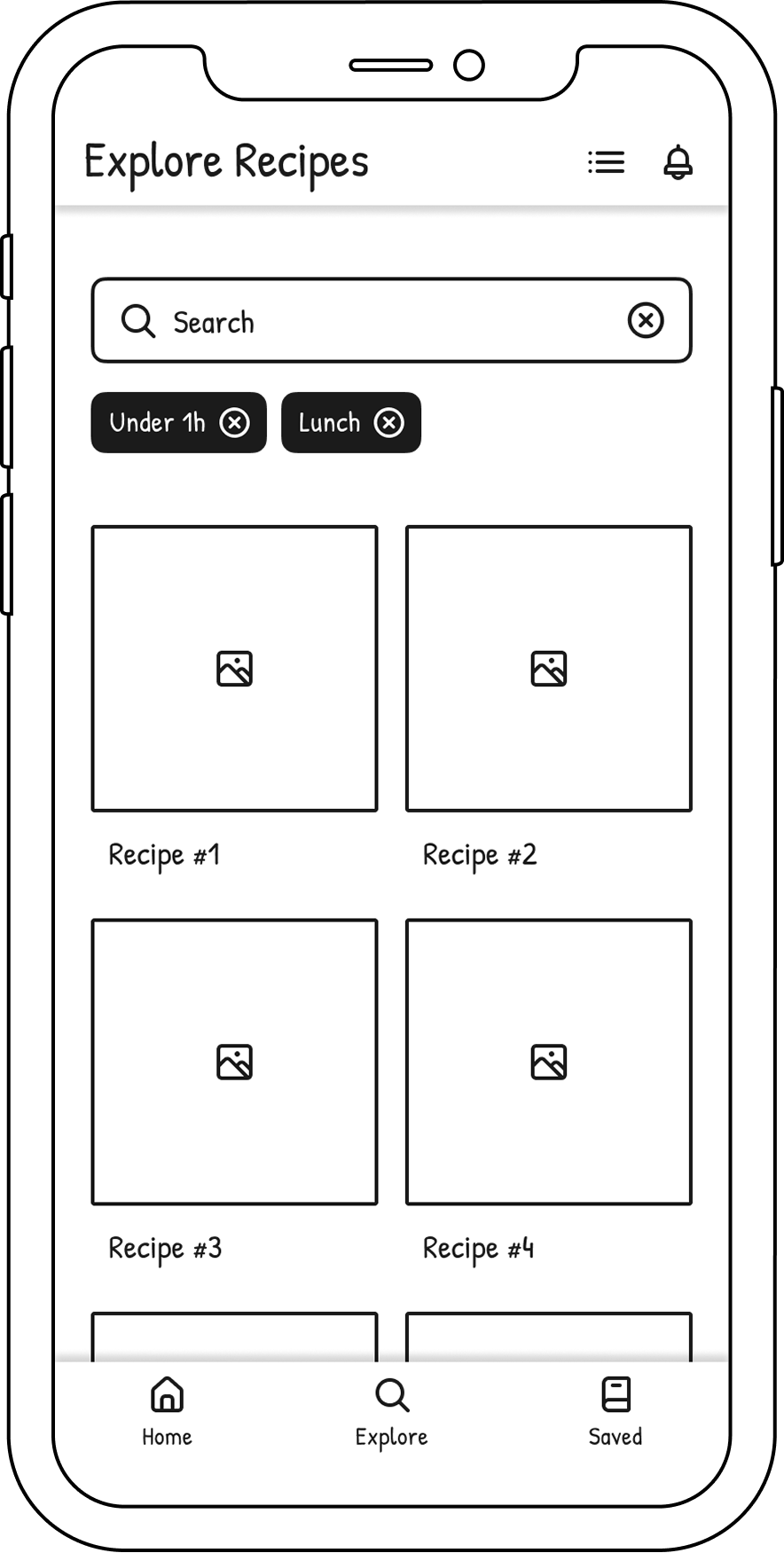
Instead of searching for a comprehensive solution, tackling one factor at a time would have helped me refine more meaningful solutions.
It was clear by the time I started iterating that EatWell was more about grocery management. However, I wanted to make something comprehensive and didn't know how to pivot properly. I overlooked simpler improvements to the current experience with meals, groceries, and cooking apps.
Time
Convenience
Motivation
Skills
Resources
Final takeaways
This was the first time I was in charge of a large-ish design project end-to-end and managed different moving parts. As much as I would have done certain things differently, it was valuable to see where my strengths and limitations lie.